Ben Curnow reflects on a decade at Leahurst and a new chapter in Canada
Posted on: 23 July 2026 by Ben Curnow in Community
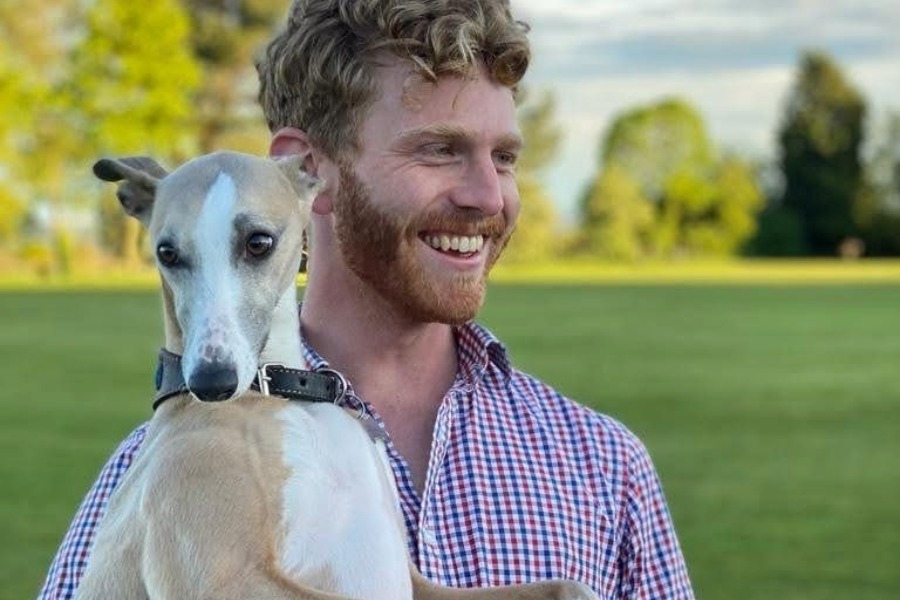
After almost a decade at Leahurst Equine Practice, Ben Curnow swapped Merseyside for Canada in late 2025. Now an assistant professor at Ontario Veterinary College, he looks back on his years at Leahurst and shares how he's settling into life on the other side of the Atlantic.
What inspired you to pursue a career in veterinary medicine?
I was very lucky (and privileged) growing up, and I was put on a pony before I could walk. It was inevitable that I would probably work with horses in the future. I was good at science, and I did think about doing Medicine rather than Veterinary Science. However, I heard negative experience of Medical School and only good about Veterinary School. That was enough to convert me, and I was lucky to get an interview and offer from Bristol Vet School in 2009.
What was your first job in mixed practice in Sheffield like?
That first job was a wake-up call! When I had applied to this tiny advert in The Vet Times, the practice initially said they didn’t want a new graduate. Two weeks later, they rang me asking if I was still interested. That was probably a sign that it wasn’t the most ‘new vet friendly’ job. I primarily did the equine work and muddled my way through each appointment as it happened. Some cases went well. Others were horrific. I will never forget the weekend where I had to put 4 horses to sleep in a row, all at different yards, two of which went badly because I was injecting off the needle as opposed to placing a catheter. That job really taught me what I wish had been emphasised at vet school, as well as what it means to have good mentorship in practice. If I was struggling, I knew I could ring my boss, and he would always come and support me!
After a few years in mixed practice, you completed an internship at Bell Equine Veterinary Clinic in Kent. Had you always known that you wanted to specialise in horses or was this something you discovered along the way?
I initially thought I would work at DEFRA because I quite liked the idea of being in London, formulating policy, eradicating TB etc. However, I went on an EMS placement at the Cornish AHVLA, and I soon became aware that it would have been a career choice that lacked the glamour and influence I had expected. When I was doing my clinical EMS placements, I found myself so much more comfortable on the equine ones. I understood the diseases, I found it easier to talk to owners, and it was much easier to get a blood sample from a jugular vein! Doing an internship after university seemed like a logical step to really immerse myself in equine veterinary care with the support of a big team.
What was the internship like? What aspects did you find challenging, and what did you enjoy?
The internship was a great experience, and it was just what I needed at the time. I was so new to everything, that it was a real baptism of fire. Within the first few weeks, I was suddenly able to place a catheter properly, I was managing anaesthetics on my own, and I understood how to do fluid therapy. It was amazing to work with really established specialists, as it felt like I was learning from the best. One thing that stands out, though, is that I learned that I really love sleep. Working a 1:2 rota was a bit of a killer, and by the end of the year, I was cooked. If I could have changed something, it would have been to have three interns instead of two. I think that would have made the internship perfect.
Following your internship, you moved up North to begin a job at Leahurst Equine Practice. What inspired you to make that move?
There was a job going! When I finished my internship, I knew I didn’t want to specialise. What I wanted was to go back to general practice and get back on the road. The position involved completion of my CertAVP and a research project, all of which culminated in a Masters of Veterinary Professional Studies over a three-year period. I figured working for a university practice would give me a chance to teach, which I had enjoyed in my internship.
You spent almost a decade working at Leahurst Equine Practice. What are your memories from that time, and what did you enjoy most about the role?
So many memories! It was a privilege to be asked to stay on as a lecturer after finishing my residency. I learned so much as a vet during my time at Leahurst, and much of that came from teaching students in addition to working with such great clinicians.
I was also proud of introducing live castrations as part of the clinical skills rotation after the pandemic. To me, that was what vet school should be all about. A day one procedure, where the students do it all with hands-off supervision. It was so encouraging to see students light up when they realised that taking off some testicles, or maintaining a horse on IV anaesthetic, isn’t necessarily that difficult.
The other memories that stick with me are the fun ones. I loved handing over my Spotify to students in the car and critiquing their music choices. I still refuse to listen to Ed Sheeran and Lewis Capaldi, but I will now make allowances for Noah Kahan. I always enjoyed student sketches, as it gives everyone a chance to be silly (and an opportunity for me to be on stage).
During your time at Leahurst, you developed an interest in equine dermatology. What drew you to this field and what are your main research interests?
What I enjoy about dermatology is that it is nearly never an emergency. It is a true medical workup that requires you to be systematic and thorough and often involves a multimodal pharmaceutical approach. It is also chronically under-researched, which is something I would like to contribute to.
What inspired you to make the big move to Canada, and was it difficult to say goodbye to Leahurst after so many years?
It was a tough decision. There are many positives to working at Leahurst and being an equine clinician. I have become very passionate about teaching and making the vet school experience focused on the student. The Ontario Veterinary College has decided to shift its focus towards this, and I saw this as an opportunity to really have an impact and steer the future of veterinary education. Plus, I have never worked abroad before, and I felt that there never had been a better time to use my Veterinary Passport and see a part of the world I had never been to before.
What does your new role as an assistant professor at Ontario Veterinary College involve, and what are you most looking forward to?
I am wearing a couple of different hats, which I see as a chance to make the role my own. The AVMA highlighted that the OVC could do more to enhance the primary care experience for students on the equine stream. What we have done is created a distributed model rotation, where students are able to see ambulatory practice with equine practitioners in the local area.
We are also looking to support students on their hospital rotations so that cases referred carry context that relates to what happened on yard and what could have been done with the case prior to referral.
I am most looking forward to working with practitioners in private clinics, as this rotation is quite novel in Canada. Students do not do EMS, so many have not had work experience in a clinic until the last year of their degree. Helping clinicians learn how to manage students on rotation and giving constructive feedback is something I feel well placed to do given the experience I had at Leahurst.
During your time working at Ontario Veterinary College so far, have you noticed any differences between veterinary training in Canada and the UK?
The DVM students are a few years older here and have had to do a degree before coming to Vet School. I think they feel more confident at taking ownership of their learning and working independently.
What I would like to see more of at the OVC is a more structured approach to experiential learning. There is a high requirement for pre-clinical and clinical EMS in the UK, which just isn’t required of the vet students here. The EMS system in the UK has its own faults, but I would like to bring my experience of the positives to Canada and help create something similar.
Thank you, Ben, for sharing your memories from your many years at Leahurst. We wish you all the best as you begin your next chapter in Canada!
If you would like to share a story with the ULVAA, please email us. We would love to hear from you!
Keywords: community.