Coming full circle: Alison Reid returns to Glasgow Vet School
Posted on: 23 July 2026 in Community
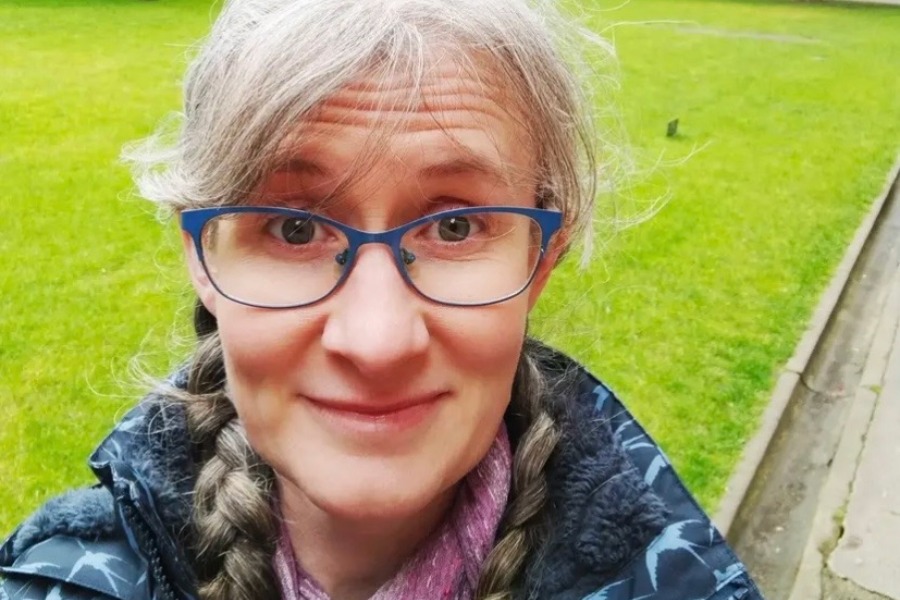
Alison Reid spent nearly twelve years as a Lecturer in Veterinary Preclinical Sciences and Clinical Skills at Liverpool Vet School. In September 2025, she returned to her native Scotland to join her alma mater, Glasgow Vet School, as BVMS1 Co-Course Leader. Alison shared what inspired her to pursue a career in veterinary education, reflected on her time at Liverpool and explained what her new role at Glasgow Vet School entails.
What inspired you to pursue a veterinary degree?
I am afraid I’m one of those people who always had veterinary in their sights. I first announced my intention when I was four years old, feeding a Clydesdale horse. I dallied with other possible careers as I grew up, of course. If I’d believed the primitive careers advice computer circa 1994, I would’ve been a scaffolder (yes, that’s really what it suggested), and if I’d believed my physics teacher circa 1996, I’d have amounted to nothing. But the call of the profession was too strong for anything else to take its place!
What are your memories from your time at Glasgow Vet School? Were there any highlights or things you found difficult?
Glasgow Vet School was boisterous, intense, ambitious and filled with warmth and good humour. I was very shy and needed pried out of my halls room like some kind of reclusive shellfish, but fortunately one person wouldn’t leave me alone until I became their friend and, as they were a gregarious and irrepressible type, I soon found my friendship group. A certain amount of ridiculousness ensued, which makes me very grateful that we didn’t have smartphones in those days. The hard copy photos are bad enough!
The early years of the course back then were very theoretical and scientific – we had a whole year of biochemistry and had to pass a biochemistry exam to progress. Rotations, though, were just a joy. I would’ve gone back and done them all again, I enjoyed it so much! We had an unusual time of it because the Foot and Mouth Disease outbreak occurred during our programme.
It was a horrible time for so many people, and many of my contemporaries had their first vet jobs out there handling the outbreak. The teaching team had to adapt fast too; I vividly remember our second-year handling exam, which they had to change last minute, and we were all trying to remain professional as we attempted to put full size halters on teeny tiny plastic cows and so on. We were also the first cohort to have OSCEs, anywhere in the world, which of we didn’t realise at the time, but feels like a legacy now.
What were your nine years in veterinary practice like?
My first role in mixed practice was absolutely the right choice for me. I joined a strong team with vets at intervals of experience, from me right up to 20 years, and a fantastic nursing team. We didn’t have the VetGDP at that time, so your learning curve was entirely your own. It was one of those jobs where you find yourself on call by yourself after two weeks in practice and have a colic, a calving and a GDV all happening at the same time. Thank goodness for the amazing nurses!
I had originally intended to be an equine vet, but it soon became clear that I enjoyed small animal more, so after a few years I made the move into small animal with a particular focus on medicine (I’m not a natural surgeon). I always loved developing a bond with clients, especially around tricky cases, and especially when contextual factors meant I had to do some serious thinking. Finding the right way forward for each case and working with the clients to get the best outcome possible was the best part for me.
I also thrived on the “well, I’ve got to do something” moments. Those moments where it was all about making the right next move, rather than thinking about the end game. Especially when I could do that with a fantastic team who were all in the same headspace. It wasn’t always fun, and I wasn’t always brilliant at it. I was sometimes cowardly and sometimes overconfident. I was often impatient, occasionally enraged and not infrequently entirely panic stricken. What I would say is the impact of my human failings varied enormously depending on the team around me. Veterinary practice is an art and science one cannot pursue alone.
What made you realise that you wanted to pursue a career in veterinary education?
I always felt enormous satisfaction from helping people learn and develop, so first I became a clinical coach for student nurses, which was fantastic. Then I randomly saw a lecturer job come up at Liverpool and applied. It wasn’t a grand plan, and I really did not have the required criteria stipulated on the advert. I just thought I’d apply, they’d turn me down, and I could bumble on knowing that I’d given it a go. I was so convinced that I wouldn’t be appointed that I went off skiing immediately after my interview and, when Kieron rang to offer me the job, I was on the side of Cairngorm with a snowboard on my feet and he had to repeat himself several times! Looking back, I believe I wanted to teach to support more people to be better vets and benefit more clients and patients than I could by practising myself. That motivation has only grown since I entered academia.
How was the transition from clinical practice to your first teaching position at Liverpool Vet School in 2013? Did you have to gain any additional qualifications to teach at university?
I mean, you’ve heard of impostor syndrome, right? Fortunately, I joined the Liverpool crew right at the start of a brand-new curriculum, so everything was fresh and everyone was creating new things together; it was a very collaborative atmosphere. I was also hugely lucky that one of the teachers from my own veterinary studies was now at Liverpool and leading the clinical end of my biggest teaching topic, so I had great support in developing (and learning!) teaching materials.
It was part of the requirements for the probationary period that we undertake the Postgraduate Certificate in Learning and Teaching in Higher Education (PGCertHE, now reconceived as PGCAP). I was slightly wrong-footed to discover that this doesn’t involve teaching people to teach, but the years in practice had fitted me very much for learning by doing and the students were wonderful and very accepting of my slightly…unorthodox and…unfiltered… teaching approach, so I soon found my feet.
In fact, I soon discovered this was where I was meant to be all along. I was lucky to encounter some excellent mentors during the PGCertHE and my early years, who encouraged my interest in the scholarly as well as the practical aspects of being an educator, and I found a whole giant chunk of my brain which had apparently hitherto been dormant and was now raring to go!
What were your highlights during your nearly 12 years teaching at Liverpool Vet School? What did you find most rewarding about your work?
Gosh. Everything. Except the admin. And the bureaucracy inherent in working in a university. I always used to joke that I’d do the teaching for free; it was everything else they were paying me for!
Every time I saw a student feel proud of themselves, learning a new skill, helping someone else grow, conquering a challenge, was pure gold. Highlights? Here are a few:
- All the hours and days dissecting specimens with Fay. So much laughter, a few tears, and one epic rock band
- Clinical skills. I am very proud of what we achieved with our approach to clinical skills teaching, and it was one of the relatively few places we get to work closely with students in the early part of the course. The clinical skills team were (and still are) amazing people. Related to that, developing models and simulations to allow early years’ students to develop more applied skills. Apart from the time my melting gelatine set the fire alarms off twice during one anatomy class….
- Cardio. Obvs.
- Interactive physiology cases, especially the acid-base sessions. Absolutely littered with lightbulb moments from the students every year.
- Our “Mental Health and Me” experience sharing session we brought into first year. This session was personally challenging for us as panel members but enormously rewarding as we saw the impact on our students.
- The wonderful vet academic mentor scheme we set up, and every student in it.
- Writing and recording graduation parodies with the amazingly talented Dan and PJ and a motley crew of disinhibited colleagues, to celebrate our students who were unable to graduate in person during the COVID-19 pandemic.
- Hosting the international VetEd conference for the first time, back in 2017. Our conference organising team included all my favourite people, and the students who helped us host were incredible.
- Origami pigs in Welcome Week.
- Every research and educational project student who took the leap and embraced a scholarship project. Taking students to conferences to present their work made me about as proud as I could get without bursting, and seeing their work reflected in changes in the curriculum put me entirely over the top.
And a million more! A highlight from my last ever session at Liverpool was when one of the students came down and handed me a list she had been keeping, of all the peculiar and ridiculous things I had said during my sessions with her cohort. At least the sessions were memorable for something! Alongside the enormous privilege and delight I feel from teaching students over the past 12 years, the main highlight was the people I got to do it with.
What were the most challenging aspects of teaching at Liverpool Vet School?
My main challenge was the fact that I chose to live over an hour away by car and had to get to campus before 8am to have a hope of a parking space! The financial challenges that have affected all universities in recent years obviously also presented difficulties, in the increasing workload with diminishing resources, but like my experience in practice I found that much can be mitigated by a fantastic team.
Why did you decide to move to Glasgow Vet School, and was it difficult to leave Liverpool behind after so long?
Personal factors necessitated a return to Scotland, and a role came up at Glasgow just when I needed it. As a Glasgow grad, I had always had a vague idea of returning there at some point in the future, and the stars aligned. I didn’t want to leave my role at Liverpool, and people who were there in my last weeks will remember what a mess I was, but it was a move that was needed for lots of reasons. Glasgow have been fantastic, welcoming me “home” with open arms. It was also both delightful and unsettling to be working with people who were my teachers back at the end of the last millennium!
What will your role at Glasgow Vet School involve and how are you finding it so far? Is there anything that you are particularly looking forward to in your new role?
My role is in curriculum development and outcomes assessment, and I have a hand in supporting our students who will be taking the NAVLE. I have also managed to negotiate my way into teaching in cardiac physiology. I’m really excited about co-leading on our plans for a renewed curriculum, which promises to be something innovative and fresh.
What would you say are the similarities and differences between Glasgow Vet School and Liverpool Vet School – has it been easy to adjust or has it been a big change compared to your time at Liverpool?
Glasgow and Liverpool graduates have always been viewed by the profession in a very similar way – proactive and courageous problem solvers. I think it was that which made me want to apply for that job in Liverpool way back in 2013. There are lots of similarities, of course, and many familiar faces, which helps, but it has been a huge adjustment. One of my Liverpool colleagues once described me as “seeing the matrix” with the way the School of Veterinary Sciences worked, so extracting myself from that matrix and taking the Glasgow red pill to try to see theirs was always going to take time.
You are also a keen researcher in veterinary education – what have been some of your research findings regarding veterinary education? What would you say are the main ways that veterinary education and the student experience can be improved?
I am indeed keen, although never as productive as I want to be! I start loads and never seem to have the time to write things up; an affliction I share with most colleagues in roles like mine. My educational research threads have been very varied, in part because I suffer from being interested in everything, and in part because one thought leads to another…
Big question, about how we could improve veterinary education and the student experience. I would like to see veterinary education becoming more flexible and personalised, with more opportunities to build the intellectual curiosity and intrinsic motivation so key to our profession.
I would like to see flexible timeframes and opportunities for micro credentialling built into courses, so students can live as well as learn and can graduate with unique skillsets on top of their day one competence. I feel students need early and meaningful opportunities to take responsibility, make decisions and act on them, and the support they need to grow from each opportunity. I believe students should be partners in their education, generating knowledge and contributing to the profession, rather than passive recipients or, worse, customers. Key to all of this, is ensuring that educators and education are nurtured, developed and rewarded for driving excellence in what they do.
Finally, what advice would you give to someone who is considering a career in veterinary education?
Don’t let an intimidating advert put you off applying. If you are passionate, empathetic, hardworking, curious and scholarly, you’ve probably got what it takes. There are now numerous ways to pursue additional qualifications in veterinary education, wherever you are in the profession, so if it’s for you then go out and get it. It is not a soft option – I work more now than I did when I was in a full-time mixed practice job with on call duties, so don’t expect it to reduce your workload or your stress levels. If you are motivated by seeing others flourish, you’ll love it. I do.
Thank you, Alison, for all you have done during your time at Liverpool Vet School – you have inspired countless students over the years. We wish you all the very best as you begin a new adventure at Glasgow Vet School. They are very lucky to have you!
If you would like to share a story with the ULVAA, please email us. We would love to hear from you!
Keywords: community.