Meet the FIMBA graduate championing the women’s game
Posted on: 15 April 2026 by Deborah Dilworth in Where are they now?
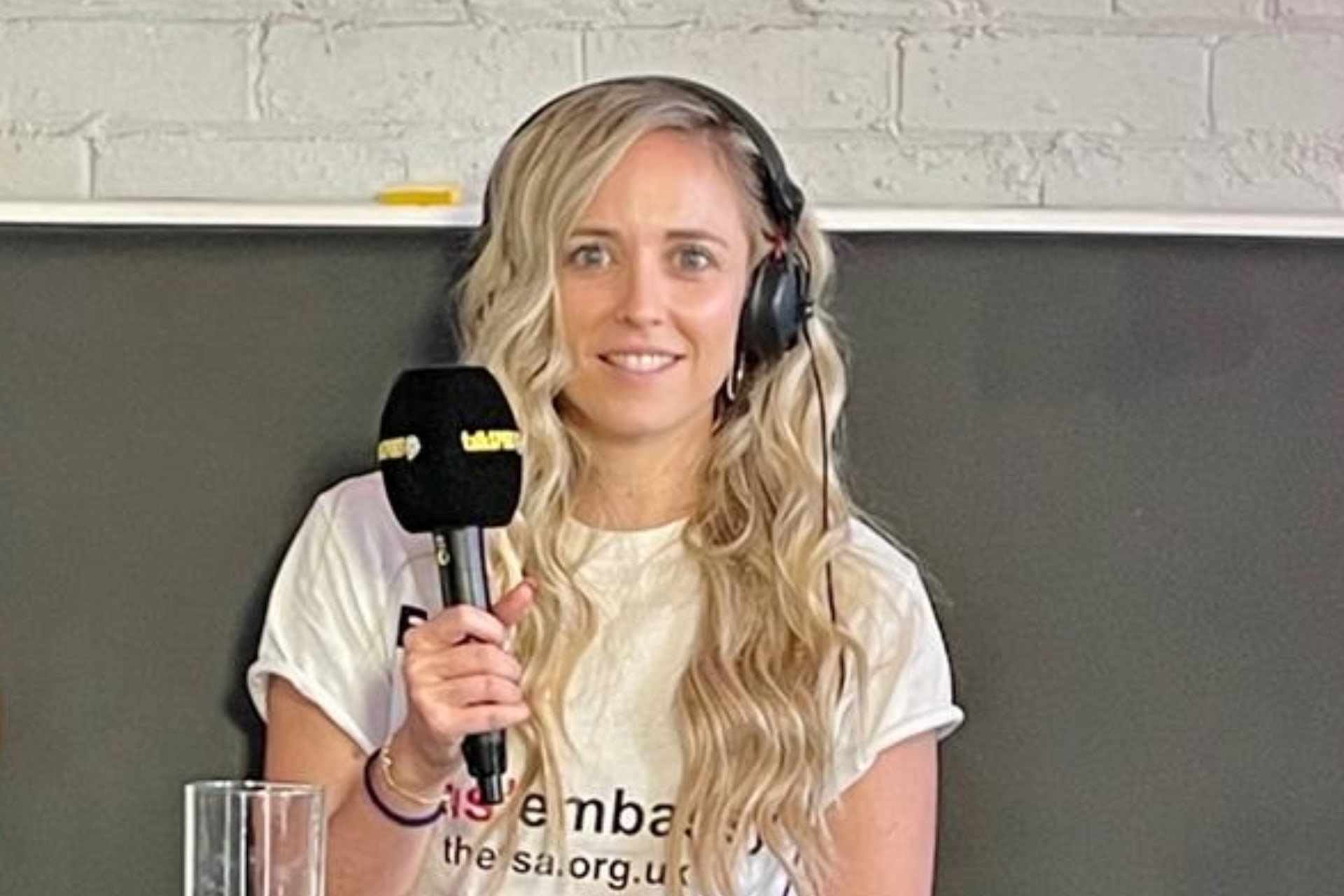
Deborah Dilworth, a Football Industries MBA (FIMBA) graduate from the University of Liverpool, has built a career championing supporters in the women’s game. Now Head of Women’s Football at the Football Supporters' Association, she reflects on her commitment to growing the game for fans at every level.
What originally inspired your interest in women’s football, and how did your career path evolve to lead you to the Football Supporters’ Association?
I started playing football in primary school in the playground with the boys. However, it was minimal as the perception seemed to be that girls were not to play. At home though, I developed into a supporter fairly quickly and started to go to football with my Dad and Ian, one of my brothers, at the start of secondary school, which is when I started to play structured football as my closest friend, Francesca, happened to invite me to play and I didn’t look back.
After graduating from university, I concentrated more on coaching football and was lucky enough to work out in the States for a period of time coaching players and coaches. I then returned to the UK to pursue my MBA at the University of Liverpool.
After graduating, I secured a job as EFL Network Manager for Supporters Direct (now the FSA) and a position with the FA as a Coach Mentor. The FSA wasn’t really focusing much on women’s football, so for the 2019 Women’s World Cup in France I pitched to deliver an embassy service similar to the one provided for fans attending men’s tournaments. Permission was granted to attend and Free Lionesses was born. Across the 2019 WWC I gave out over 1000 free supporters’ guides and chatted with fans about how we could offer more support for Lionesses fans in the future. We also worked with stakeholders across the tournament to help better the experience of travelling fans. Free Lionesses also help spread the message about setting up a domestic women’s game network of supporters’ groups.
You are now Head of Women’s Football at the Football Supporters’ Association. What does a typical day look like and what are the key priorities you’re responsible for?
A typical day is hard to describe; days revolve around several key areas: liaising with and working alongside stakeholders across the women’s game to advocate for fans, training and developing our members to help them create community projects and run their groups effectively, orchestrating events to grow awareness around the women’s game, and representing fans in various meetings to ensure fan voice is central to key decisions.
I work across both the international and the domestic games, so every day truly looks quite different. For example, I am currently in Iceland preparing for our pre-match meetup for the Lionesses game in a couple of days. Next week, I will attend WSL Football’s Safety and Security conference. Each week looks very different.
What initiatives or projects are you most proud of and why?
I am proud of several things, but I am especially proud that five years after 2019, we have over 70 member fan groups/media channels in the FSA Women’s Game Network. These fan groups consist of brilliant volunteers who work hard to grow match-day attendance, improve the fan experience, and build trusted relationships with stakeholders across the women’s game. I am hugely grateful to be able to work with women’s game fans on a daily basis both on an international and domestic level.
Some other key achievements include:
- 'Part of the Pyramid' alongside the FA WNL - Themed events to celebrate everyones part in the pyramid of women's football
- My Country, My Shirt - A Fans For Diversity project showcasing supporters of the Lionesses ahead of Euro 2022
- Agreeing structured supporter engagement with the women's leagues in 2022
- Evidence gathering and submission and participation in the Carney Review of Women's Football in 2022/2023
- 100 Years of Supporters supporting the women's game - this was to mark the anniversary of the ban on women's football in 2021
- Publications include: Free Lionesses free Supporters Guides for Euros 2025, WWC 2023, Euros 2022, WWC 2019, Fans For Diversity x Women's Game Guidance booklet, Women's Game Survey 2024 and 2022, Women's Game Strategy 2024 and 2022
What are some of the biggest challenges facing women’s football today and how do you approach leading through those challenges?
Ensuring that consultation is built in to everything we do. Whilst there are challenges and new ones likely to come up, I think we also have to look at some of the great things that have happened over the last 20 years (and even further back than this) to build the game to where it is at the minute. As long as we are all collaborating the challenges will be easier.
How did the Football Industries MBA prepare you for your career in Football?
The MBA gave me a new level of critical thinking and consideration for football as a global sport. It provided a platform to showcase skills and then to learn new ones, it also gave an ability to consider what part of football I might like to lean into next. I believe having the MBA has helped me secure a number of positions in football and it is still often a handy talking point because some people are still surprised you can do an MBA in Football Industries and I enjoy talking about the course and sharing what I learnt through it.
The MBA also gave me a platform and a network to work with and proactively reach into, as long as you are polite and proactive there is always a helping hand reaching back to you.
What advice would you give current students who are interested in pursuing a career in sports administration or advocacy, particularly within women’s football?
- Embrace what you can bring
- Think about what you value and what your values are
- Be as prepared and informed as possible
- Where possible always help others around you - open doors, lift others up and be intentional on inclusion
- Networking and building relationships in football are extremely important, it is a small industry despite its size. Networking isn’t important because of what you can gain from it, it is important to consider what you can give. One of the reasons why I really like the women’s game is the spirit of collaboration is so high so this to me is what networking is about.
Keywords: Where are they now?.