Jonathan's career story from engineering graduate to founder of investment banking firm
Posted on: 10 April 2026 by Jonathan Hodson-Walker in Where are they now?
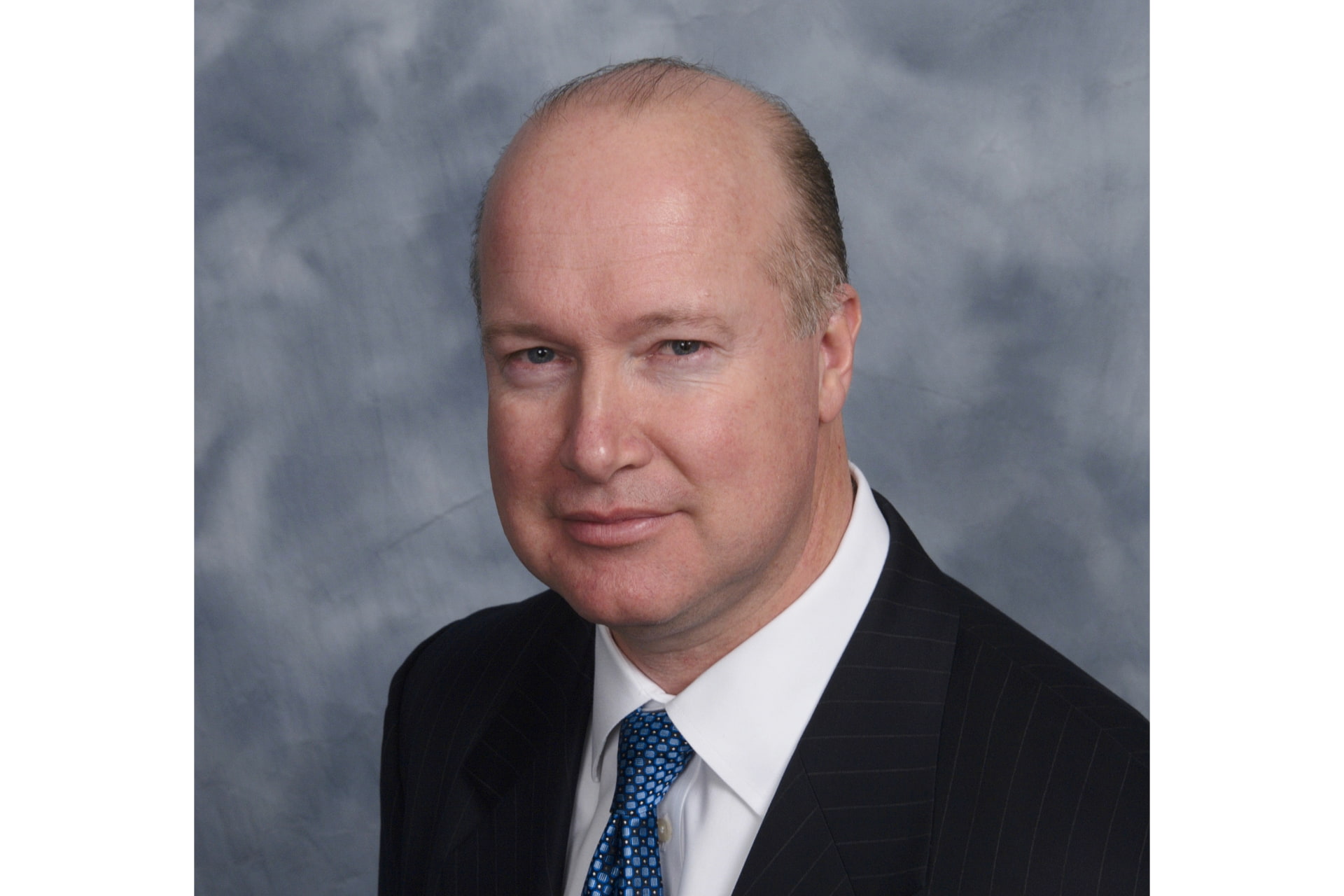
We caught up with Mechanical Engineering graduate Jonathan Hodson-Walker to discuss his memories of studying at the University, his career transition from engineering to business, and his role in founding investment banking firm Silverwood Partners and venture capital firm Silverwood Ventures.
You studied Mechanical Engineering in the 1980s. What made you choose Liverpool?
"I wanted to study engineering related to construction, and Liverpool had one of the few departments at the time that focused on mechanical engineering services for buildings. I enjoyed meeting the faculty when I came for a university visit and liked the courses that were offered in the curriculum."
Do you have any experiences or reflections from your time as a student that you remember?
"I remember the striking red-brick Victorian architecture of the area where the Mechanical and Building Engineering departments were located. The student union was just across the road, and I spent many hours there with friends. The city was gritty—the Toxteth riots took place the year before I started—but the people were great, and there was a vibrant social scene. In its heyday as a major port and shipbuilding centre, Liverpool had great commercial success, and it is a beautiful city with a history and architecture built from that financial foundation."
And have you been back to Liverpool since you graduated?
"I have not been back since I graduated in 1986. I worked for two years in Manchester as an engineering consultant and moved to the United States in January 1988. I would love to come back and visit at some point."
This year marks 40 years for the Class of 1986!
"That's a good point that I had not really thought about. It is a reunion year!"
Do you speak to anyone from your class year, or are you in touch with anyone?
"I stay in touch with a handful of people from the engineering department that I either shared a house with or worked with. A former colleague of mine, who also went to Liverpool University, came to work at the same firm for a year of work experience when I started full-time. He is still in the engineering business, and I stay in touch with him. Several former roommates had careers as engineers, and I stay in touch with them through holiday cards and letters. Most of the people I stay in touch with have had long engineering careers and are busy with their lives and families."
After graduating from the University, you went on to do an MBA in the US at Indiana University. Can you tell us more about your transition from engineering to business?
"My father was a partner in a steel fabrication company and had other entrepreneurial ventures, so I was exposed to business from an early age. The Liverpool engineering degree recommended a year of work experience between the second and final year. I worked in Manchester as a consulting engineer during that year and met people in different parts of the firm around the country. Some had US experience, which sparked my interest in the United States. However, I had no money, and there was no demand for entry-level mechanical engineers with UK training in the US.
"When I came back to campus for my final year, I was walking along a corridor in the Victoria Engineering building one day and saw a poster on a notice board for an MBA programme in America. This was a chance occurrence—as at the time there was no internet, no email, and no easy way to find information.
"I looked into it more and realised the MBA would be a great fit for me because it would be a bridge from engineering into business. However, I also learned that a US MBA was an expensive proposition. I had the qualifications to apply for merit scholarships, so I applied for just about every possible scholarship that was available.
"I was awarded one of 25 Fulbright Scholarships for study in the USA and was one of five people who studied business in my award year. The Fulbright got me part of the way financially. I was also granted a Science and Engineering Research Council studentship, which was an all-expenses-paid award for a programme of study.
Indiana University offered me an MBA position starting in January 1988, so it all came together and I hopped on a plane to the United States."
How was your time on the MBA?
"My trip to the USA for a sight-unseen two-year MBA programme started with a flight from Manchester to Chicago. The Fulbright organisation had booked me on a connecting flight to Bloomington, Indiana, on a “puddle jumper”—a small propeller plane—that arrived in the middle of a snowstorm. A memorable start to my studies in the USA.
"There was a lot to learn on the MBA: the foundational principles of business—accounting, marketing, strategy—you name it. It covered all the things you think about when running a company. It was a bridge for me from the engineering world into the finance world—from fluid flows to cash flows. It was a pivotally valuable experience from both a career and educational perspective. It was also a business culture shock to come to the United States, where there is a different attitude and a much more intense, pervasive entrepreneurial environment than in the UK."
Can you tell us about your journey from your studies to founding and becoming Managing Partner and senior principal at Silverwood Partners?
"During the MBA programme, I decided I wanted a job in New York or London in investment banking. At the time, the New York investment banks were not focused on recruiting at Indiana University. I had to apply for jobs by mail, get interviews, and travel to New York and London to meet prospective employers in person. After many rejections and lots of flying around, I was offered a job with Drexel Burnham Lambert, which was a big investment bank at the time. The goal was to work in New York for a year, meet people there, and then transfer back to the London office.
"I started at Drexel Burnham in the investment banking department on Wall Street in New York in August 1989. Things were going well until there was a financial crisis in early 1990, and Drexel went bankrupt in February of that year.
"For visa reasons, I returned to the UK and joined Credit Suisse First Boston (CSFB) as an investment banker, providing advice to large UK companies. The firm was a joint venture between Credit Suisse, a large Swiss bank, and First Boston, a major US investment bank well known for mergers and acquisitions. CSFB focused on the so-called Euro markets—lightly regulated international financial markets for bond deals and other securities offerings.
"After spending two years with CSFB in London, I relocated back to the States in 1992 and transferred to the Boston office of First Boston. I have been in Boston ever since, but have spent much time travelling to and working in New York. I moved into technology investment banking and left First Boston in 1995. I joined a regional firm in Boston, spent four years there, then joined another regional firm as Head of Communications Technology Investment Banking. In 2001, I started my own firm, Silverwood Partners, a “boutique” focused on M&A and private financings. This year will be our 25th anniversary in July."
As Managing Partner and senior principal at Silverwood Partners, can you talk us through a typical day in your role?
"Investment banking covers a lot of activities in the financial markets—from sales and trading to currencies, swaps, real estate, and investment management. At Silverwood Partners, we are very specialised out of necessity. The firm provides M&A and private financing advice to companies in the technology, consumer, and healthcare industries in the USA and internationally. We're not all things to all people—our goal is to be deeply involved and connected in those industries. Clients retain Silverwood Partners because of our industry knowledge and connections.
"Mergers and acquisitions involve the buying and selling of companies. If you're going to sell your house, you hire an estate agent to broker the sale. If you're selling a business, you hire an investment banker to provide advice and manage what is usually a complex process. We act as advisors—structuring and managing the sale, introducing clients to potential buyers, and assisting in negotiations.
"Private financings, or “private placements,” involve the sale of securities outside the public markets. Most of our financing clients are private companies. The private markets have grown significantly over the last 20 years. There are now over 1,000 “unicorn” companies in the USA alone—private companies valued at over $1 billion—and the market continues to expand.
"If a company that’s not publicly traded is looking to raise capital, they typically do so privately with individuals, institutions, and other companies. We advise on structuring and marketing the offering and help match companies with investors.
"Two years ago, we formed Silverwood Ventures, a growth-stage investor. The venture capital industry is large and varied, with firms focusing on different stages of a company’s development. Silverwood Ventures focuses on companies that have proven products and markets and are seeking capital for growth and expansion."
What skills do you think people should gain if they want a career in investment banking?
"Investment banking is a relentlessly competitive business. Most activity is high-stakes, and you are working with intelligent, driven people. It is difficult to enter the industry, as jobs are highly sought after and recruiting is very competitive. Prerequisites include strong academic credentials, a demonstrated interest in finance, and a track record of achievement. There are usually many rounds of interviews before a job offer is made.
"A City or Wall Street career involves long hours and the ability to sustain a high level of intensity. An analyst or associate role provides an incredible grounding in corporate finance and can be a platform for advancement in investment banking or careers in private equity or venture capital."
For students looking to follow in your footsteps, what advice would you give?
"If you want to do well, you’re ultimately going to have to become a businessperson as you rise through a company. You must understand your products and services, how your business makes money, and the broader business environment in which your company operates. Most successful engineers are as much businesspeople as they are engineers.
"I’d suggest reading the Financial Times or The Wall Street Journal. Steep yourself in how people talk and think about business. Open a brokerage account, buy some shares, and learn about your investments. Research interesting companies. It’s important to understand the business of your industry, not just your functional role."
Is there anything you learned at the University of Liverpool that you have taken with you into your career?
"At Liverpool, I graduated with a first-class honours degree. Achieving that taught me the level of effort required to reach a defined objective.
"The Liverpool programme trained me very well for my early engineering career. If I had stayed in engineering, it would have been a great foundation. My former classmates have had strong engineering careers. Early on, I decided engineering was not for me long-term, and I moved into finance. Liverpool University was—and is—a great programme, with engaged professors and strong foundational training."
What kind of things can you get up to in Boston? And what do you do in your spare time?
"Boston is a huge sports town. The New England Patriots have had a strong run over the past 25 years. The Boston Red Sox are a storied franchise, and the Bruins and Celtics are also very successful. Boston has great educational institutions (Harvard, MIT, and many others), a leading healthcare sector, and a broad business community. Boston is on the ocean, and the mountains, lakes, and other New England states are a short drive away.
"My family owns an organic farm just outside Boston, and I spend a lot of time there in the summer—getting outside, doing projects, and driving heavy equipment. I also like to play golf, usually early in the morning before the course gets busy."
How can other graduates from the University connect with you?
"You can connect with me on LinkedIn, subscribe to my publications on Substack. Or e-mail me at: jhw@silverwoodpartners.com."
Thank you to Jonathan for taking the time to share his career journey and insights with the University of Liverpool.
Keywords: Where are they now?.