From Matcha Enthusiast to Founder: Sonia Hamoud’s Entrepreneurial Journey
Posted on: 14 September 2026 by Sonia Hamoud in Where are they now?
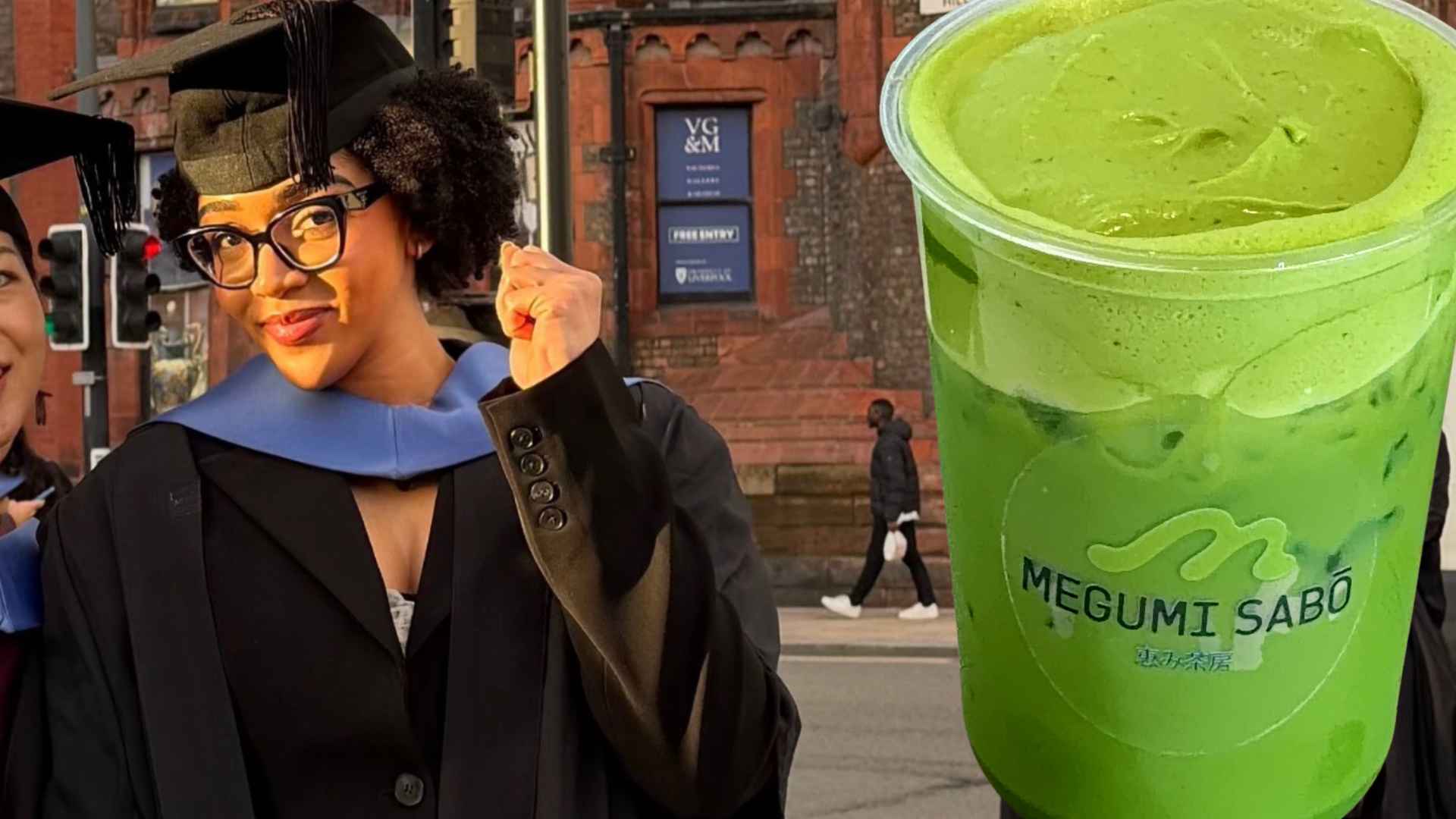
University of Liverpool alumna Sonia Hamoud shares how her time at Liverpool helped build the confidence, curiosity and courage that led her to launch her own business, Megumi Sabō. From discovering her passion for authentic matcha to creating a growing community in Liverpool, Sonia reflects on her journey as a founder.
Could you tell us a little about your time at the University of Liverpool and what you studied?
I studied MSc International Business and I would say my time there was a real balance between studying and building my career. Of course, I spent time attending lectures and seminars, working on essays and doing research, but I also made a conscious effort to get involved beyond the classroom. I took part in the Design Your Future entrepreneurship programme and the ULMS Enhance weeks, which gave me opportunities to attend workshops, meet new people and start thinking more seriously about my future.
Outside of my course, I became really interested in the matcha industry and started doing my own market research. I would spend a lot of time in coffee shops and matcha tea houses, sometimes three or four times a week, trying different products and paying attention to the customer experience. I wanted to understand the industry beyond what I could find online, so I made sure I was learning both through my studies and by experiencing the market for myself. Looking back, a lot of that research eventually became the foundation for what I am building today.
What attracted you to your MSc International Business course and what were some of your highlights from your time at Liverpool?
After studying Law for three years, I got to a point where I realised I wanted a change in direction. I did not go into International Business with everything figured out. I just remember thinking, International Business sounds really interesting, and I liked the idea of gaining a broader understanding of how businesses work. I also knew that even if I ever decided to return to law, the skills I gained from the degree would still be valuable and transferable.
One of my biggest highlights from Liverpool was the people I met and the connections I built. I still have relationships with so many people from the university, and even now, I can reach out to people when I need advice or support. I also really valued having access to the university's resources, particularly the library and research databases, because they allowed me to explore my interests far beyond my course. At the time, I did not realise how valuable those opportunities would become, but looking back, they played a big part in helping me develop the ideas and knowledge that eventually led to my business.
Looking back, what skills or experiences from your time at Liverpool have stayed with you and helped shape your career since graduating?
I think one of the biggest things I took away from Liverpool was confidence. I became much more comfortable putting myself out there, walking up to people, asking questions and starting conversations.
I never imagined I would become someone who could just reach out to a CEO or approach someone at a networking event and introduce myself, but that confidence and courage have opened so many doors for me.
The ULMS Enhance weeks and Design Your Future were a big part of that. They gave me opportunities to step outside the classroom, meet different people and put myself in rooms that I might not have had the confidence to enter before. I even had the opportunity to carry out research for a startup in London, which later led to me receiving an award from the university. Looking back, I realise that some of the most valuable things I gained were not necessarily the skills you can easily put on a CV. It was the confidence, the courage and the ability to speak to people. I have learnt that people are not as intimidating as we sometimes make them out to be. Sometimes, you just have to be brave enough to walk up, introduce yourself and ask the question.
You graduated from your MSc only six months ago and have already launched your own business. Could you tell us about Megumi Sabō and where the idea came from?
Megumi Sabō actually started as an idea in November 2024, while I was taking a shower - which still makes me laugh when I think about it. I first started drinking matcha in 2021 when I moved to the UK, and I genuinely thought what I was drinking was good matcha. It was not until I visited my sister in Preston and she made me a matcha that I realised this is what it is actually supposed to taste like. That experience completely changed my perspective. I suddenly had a standard for what good matcha could taste like, and I became determined to understand more about where matcha comes from, how it is made and what makes one matcha different from another.
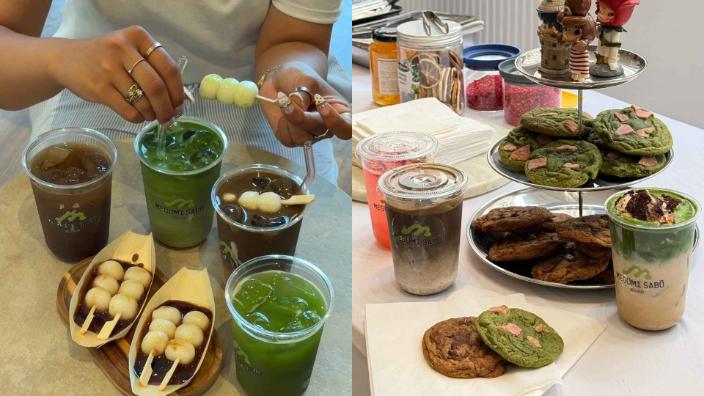
Today, Megumi Sabō, which means “tea room of blessings”, is a modern Japanese matcha experience based in Liverpool. We have a dual menu, with a Japanese focused menu centred around unrefined sugars and a more modern menu featuring creative matcha drinks and cloud toppings. We also offer hojicha and non caffeinated options such as our yuzu refresher and decaf matcha.
What made you decide to pursue the idea and at what point did you realise you wanted to turn it from an idea into a business?
After my birthday in January 2025, a friend got me a matcha set from Japan, and I started making matcha at home. I watched YouTube videos, did my own research and kept practising, and every time I made a cup I thought this is what it is actually supposed to taste like. I started inviting my friends over to try it, giving it to people I did not know and asking them what they thought. I wanted to understand whether what I was experiencing was something other people could taste too. I felt that people deserved the opportunity to experience what authentic matcha could actually taste like, and I wanted to bring that experience to a city that I had grown to love. That was the point where it stopped feeling like just an idea and started feeling like something I genuinely needed to pursue.
Since registering the business, you’ve hosted three sold-out pop-ups across the Liverpool City Region. What have been some of your biggest highlights and achievements so far?
I think my biggest achievement is the fact that people in the city were willing to believe in someone so young. They did not know me, but they still decided to give me a chance. I know people often focus on profits when they talk about starting a business, but for me, building a community was always really important. When I first moved to Liverpool, I felt very lonely at times, so seeing people come to my pop ups and connect with each other around something as simple as a cup of matcha means so much to me. In a way, it feels like I have created the community I once needed for myself.
One of my favourite things has been seeing how much love people have shown the brand. People have started calling it the “LIVERPULDIAN matcha”, asking to become matcha ambassadors and constantly messaging me saying they need another pop up or that I need to open a permanent space.
Seeing something that started as an idea become something that people in Liverpool feel connected to has probably been the biggest highlight of the journey so far.
What has surprised you most about becoming a founder?
What has surprised me most is probably how difficult starting a business actually is and how much belief and faith you have to have in yourself. But I have realised that as a founder, you learn something new every single day.
You also have to become a problem solver very quickly. When something goes wrong, you cannot spend too much time dwelling on it because there is always something else that needs your attention. You have to ask yourself, okay, this has happened so what do I do now? How do I fix it? How do I pivot and move forward? I think learning how to push through challenges, deal with negativity and keep moving has probably been one of the biggest lessons for me.
Being a founder has taught me to think quickly, be more assertive and, most importantly, keep going even when things do not go the way I expected.
What’s next for you and Megumi Sabō?
I absolutely love doing pop ups, but they are also quite demanding, so I am thinking carefully about what the next stage of the business should look like. We have had so much demand for a permanent space as well as our own matcha powders, so those are two areas I am really exploring right now. Ultimately, I want to find ways to serve the people who have supported us, because being able to do that means a lot to me.
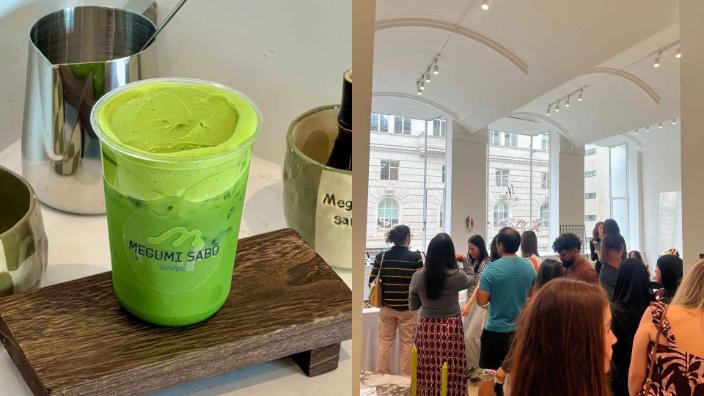
I would also love to bring Megumi Sabō back to the University of Liverpool. I want people to know that Liverpool has good matcha and that there is a local business behind it. Beyond the business itself, I also want to give back to the community that has supported me. I am looking into opportunities to work with fundraisers and community initiatives where I can contribute in some way, whether that involves giving out free matcha or simply using the business to support something bigger.
For me, the future of Megumi Sabō is not just about growing the business, but growing it in a way that continues to bring people together.
Finally, what advice would you give to current students and recent graduates who have an idea for a business but aren’t sure whether they should take the leap?
I think the biggest advice I can give is that we already know life is hard, so you have to trust yourself enough to keep going after the things you really want. You have to believe the heck out of yourself, even when you cannot see it working yet. You need faith, you need courage and you need to keep going. Sometimes, you just have to say, this is going to work. I know it is going to work.
Thank you to Sonia for sharing her inspiring founder story and reflecting on the experiences that helped shape her journey. If you’re a University of Liverpool graduate with a story, career journey or experience you would like to share with our community, we would love to hear from you.
Keywords: Where are they now?.