From Economics to M&A with Hector Glover
Posted on: 1 October 2026 by Hector Glover in Where are they now?

Economics graduate Hector Glover shares how his University of Liverpool experience, from a Finance placement at UKRI to leadership roles with the Boat Club, helped shape his career journey. Now working in Aon’s M&A and Transaction Solutions team, Hector reflects on finding his path, building a career and making the most of every opportunity.
What initially attracted you to Economics and what did you particularly enjoy about studying the course?
Having enjoyed maths at A-level, I knew I wanted to study a subject that would use and further develop these skills. I was also interested in human geography and the factors that shape global trends. Economics brought these interests together, using maths to explain real-world issues and patterns. Creative Economics and Sport Economics were some of my favourite modules of the course, giving me freedom on the topic of my essay. I particularly enjoyed modelling the effect of managerial changes on a football teams’ performance, I chose my team Harrogate Town, whose manager has been there since 2009, and Harrogate were coincidentally near the bottom of the table at the time!
You completed a year-long Finance industrial placement as part of your course at UK Research and Innovation (UKRI). What did you learn from your year in industry and how did the experience help prepare you for your graduate career?
I learnt a lot during my year at UKRI, particularly how to organise my workload and prioritise tasks so that I could complete them on time and to a high standard.
Simply spending a year in a professional environment was also valuable; it helped me become comfortable working regular office hours and speaking with senior colleagues.
When applying for graduate roles, I could draw on genuine workplace examples to demonstrate my skills. Just as importantly, the placement helped me understand what I did not want from my career; although I enjoyed the experience, I realised that accounting was not the path I wanted to go down.
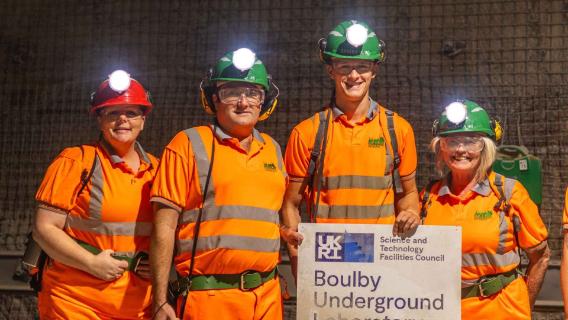
Hector on placement at UK Research and Innovation.
Alongside your studies, you took on a number of roles with the University of Liverpool Boat Club, including Treasurer and later Men’s Captain. What did you enjoy about being involved with the Boat Club?
The Boat Club was an amazing experience. Training with the same group six days a week created a close-knit group and naturally made me want to give something back by joining the committee. I enjoyed the responsibility of being Treasurer and later Men’s Captain. Balancing intensive training, my studies and committee duties significantly strengthened my organisation and time-management skills. As Captain, I also learnt how to manage different personalities and expectations, and how to communicate decisions clearly and respectfully when not everyone agreed with the outcome, like crew selection. These experiences have been invaluable in my professional life.
You joined Aon last year as a Graduate in the M&A and Transaction Solutions team. What attracted you to this particular area of the business and what has your experience been like so far?
My interest in M&A grew from the finance modules I particularly enjoyed during my degree, and I wanted to explore this area of finance further. My experience so far has been excellent; working on complex and live transactions and help with the negotiations of the policies has been very interesting and rewarding. The graduate scheme consists of three six-month rotations, some of which extend beyond deal-focused work, giving me a broader understanding of Aon but also the opportunity to build relationships across the business. The scheme also provides extensive training and regular events, which have helped me get to know my graduate cohort.
What does a typical day look like for you in your graduate role?
A typical day varies considerably depending on my rotation. During my Warranty and Indemnity broking rotation, I spent much of my time managing emails, arranging NDAs and NRLs, preparing reports and supporting the policy negotiation process. In my current Value Creation rotation, the work involves fewer emails and more regular client deliverables, including reports and pitch presentations. Recently I have been helping run a newly launched product that helps provide clients with additional insurance capacity. Much of my recent work has therefore involved establishing the product, liaising with compliance and learning the processes needed to deliver it effectively. What I enjoy most is the people as the team at Aon are great and have made me feel very welcomed since I joined. The work itself is also very interesting, and the exposure I have received has created further opportunities to learn and take on greater responsibility.
You recently achieved the CII Level 4 Diploma in Insurance - congratulations! What was it like balancing professional work with studying for the qualification?
Balancing full-time work with studying was challenging, particularly when preparing for exams and completing coursework. Using spare time effectively - whether during quieter periods, a free hour or while travelling - was essential in keeping on top of both commitments. The qualification has given me a broad understanding of the insurance industry, helping me better understand not only broking but also underwriting, claims handling and loss adjusting.
What are your plans for your career over the next few years?
I plan to remain at Aon over the next few years. I expect to complete the graduate scheme in approximately six months, after which I hope to move into a permanent role and continue progressing in my career. I have also always wanted to spend some time working abroad and hope to explore this further as my career develops. Being part of an international organisation is a significant advantage because it makes opportunities like this possible.
What advice would you give to current students who are thinking about applying for a Year in Industry or trying to secure their first graduate role?
My main advice is to start early. Your first few applications may not be your best, but each one is part of the learning process and will help you become more familiar with the tests, questions and examples you need to prepare. Consistency is also important, submitting too many applications at once can mean you end up with lots of tests and video interviews within a short period, I missed some deadlines because of this. Keeping a tracker is therefore essential for managing deadlines and to also be able to see which stage you are at.
Remember that rejection is a normal part of applying. Learn from it, move forward and focus on the next opportunity.
Finally, what would you say to other recent graduates who might be feeling uncertain about their next steps after university?
Your first role is not permanent and does not define your entire career. Each opportunity gives you the chance to learn, and the skills you develop can often be transferred to something else.
Knowing what you want to do is valuable, but it is equally important to remain open-minded and make the most of your current situation.
Keywords: Where are they now?.