Colm Hand: From Shamrock Rovers to UEFA
Posted on: 2 November 2026 by Colm Hand in Where are they now?
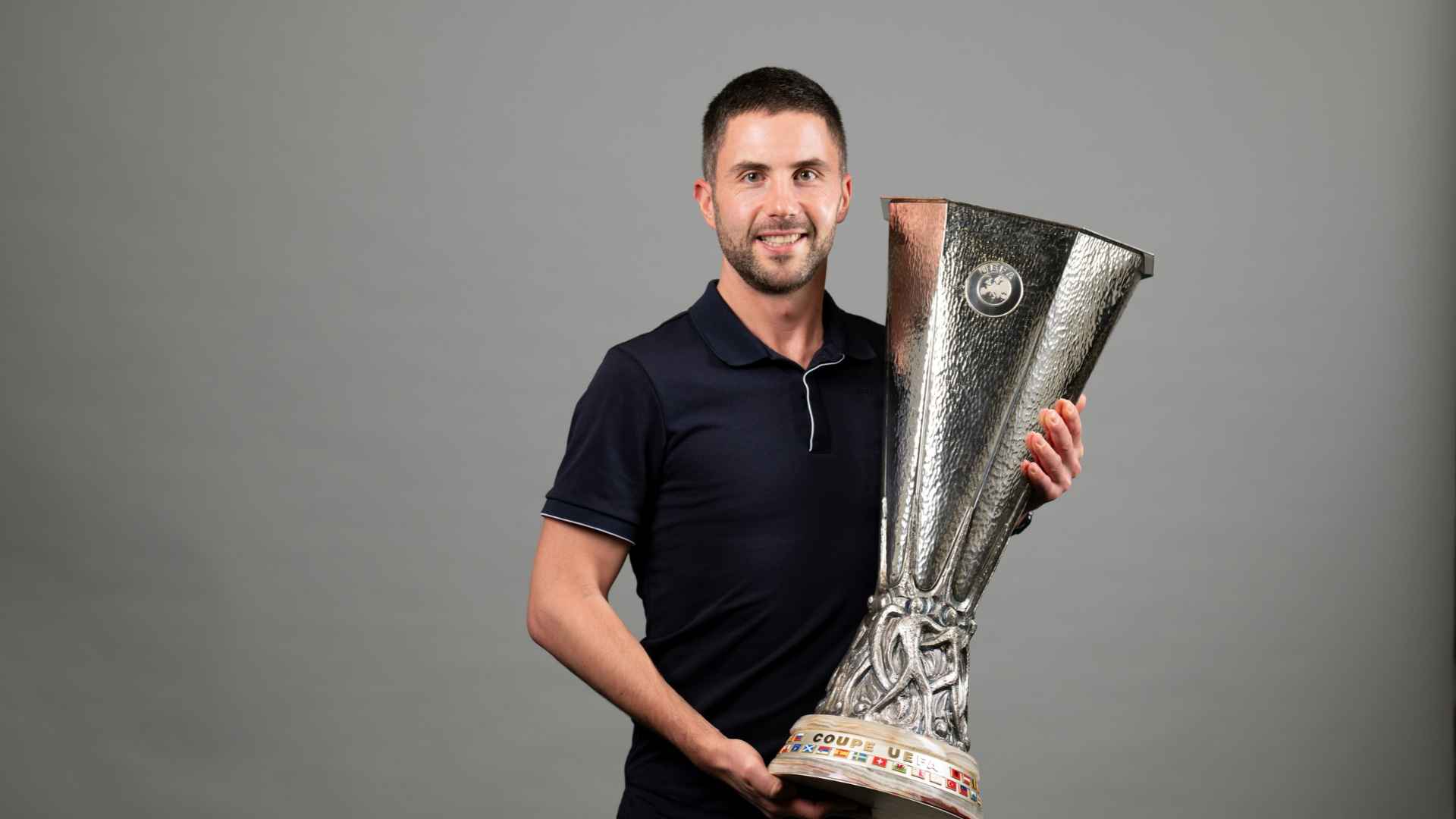
From watching Shamrock Rovers as a child to being Project Lead for UEFA Conference League Final 2027, Football Industries graduate Colm Hand, talks about his current role at UEFA, his career journey and the lessons he's learnt along the way.
What does your current role with UEFA involve and what do you enjoy most about it?
As a Project Lead for UEFA Club Competition Finals, I coordinate work across UEFA and the Local Organising Committee (National Association, Club, Stadium, City, Authorities etc.) to ensure that each event is delivered on time, within budget and to the highest possible standards of safety, operational delivery and spectator experience. In 2027, I will be working on the UEFA Conference League Final at Beşiktaş Park in Istanbul, as well as the UEFA Super Cup at the Johan Cruijff ArenA in Amsterdam.
Previously, I was a Venue Manager, with overall responsibility for stadium operations. My new role sits above the Venue Manager, who reports to me, along with the Host City Manager, who oversees city operations, including mobility, fan meeting points, fan festivals and official dinners.
What I enjoy most is the event environment and the collective effort required to deliver a match watched by millions of people around the world. I feel privileged to be involved in some of football’s biggest events. I also gain great fulfilment from working in different countries and alongside people from many different cultures. That diversity is present not only in the countries hosting the finals, but also internally at UEFA, where colleagues bring a wide range of nationalities, perspectives and experiences to the table.
Many fans only see 90 minutes on the pitch. What goes on behind the scenes that would surprise people about delivering a major UEFA event?
Although I had worked in football operations before joining UEFA, I was still surprised and impressed by the level of detail involved in delivering a final or another major UEFA event. For one event, approximately 40 different competence centres or departments are involved. These cover areas such as safety and security, ticketing, hospitality production, signage, accommodation, ICT, technical services, mobility, legal, communications, among many others.
We usually conduct four or five working visits to each venue, with the project beginning approximately 18 months before the Final. This is the key planning period. Some people are also surprised that several members of staff are solely responsible for and work on the delivery of a single match.
When we arrive on-site for the delivery phase, no detail is overlooked. For example, people may have seen stories from the FIFA World Cup about visible commercial brands being covered. We refer to this as creating a “clean site.” Covering brand names on televisions or coffee machines may seem excessive, but major commercial investments are involved. It is therefore important to protect UEFA’s partners and ensure that they receive the visibility for which they have paid.
Other examples include rebranding the stadium and parts of the host city, developing extensive wayfinding programmes and even replacing menu boards at concession stands. These details are largely invisible to spectators, but they all contribute to the overall event experience.
What have been the key experiences that shaped your journey in football?
During my undergraduate degree in Business Management at the Dublin Institute of Technology, I completed an internship with a sports travel company. That was my first experience of working in sport. After graduating, I moved into Human Resources, but I quickly realised that sport and events were where I wanted to build my career.
Several experiences have shaped my journey. One was spending three years in Dallas, Texas, working across multiple sports. I was involved in large-scale events such as NFL London, March Madness Basketball and American Football bowl games. This taught me that, although every sport is different, many of the fundamentals of event delivery remain the same: there is a long planning phase followed by a short and intense implementation phase.
Early in my career, I worked on a major event where, for the first time, I did not feel completely in control. That experience taught me that it is acceptable not to control everything. In event operations, the ability to react calmly, solve problems and make good decisions can be more valuable than trying to control every detail.
Another important experience was my time at the Football Association of Ireland. I followed my heart over my head in this instance and moved home from Dallas. The role opened my eyes to some of the realities of working in football, including pressure on staff, budget constraints and the impact that results on the pitch can have across an organisation. It was a fantastic place to learn, take on significant responsibility and experience the pride of representing my country through my work.
My time at the University of Liverpool was also instrumental. I started freelancing to support myself during my studies and made a point of saying yes to opportunities, regardless of how big or small the assignment might be. My work ranged from returning to the Football Association of Ireland as a matchday Press Officer to organising training camps for Australian schools visiting the UK.
Networking became increasingly important during that period and opened further doors. I eventually worked as a Match Manager for the Women’s Super League in England and supported UEFA Women’s EURO 2022. Throughout that period, I built relationships with people across the industry. When a position became available at UEFA, I had established contacts who were able to support my application and provide references.
FIMBA also gave me an opportunity to pause, reflect on my career and confirm that I wanted to continue working in operations. It broadened my network and helped me grow both personally and professionally.
You’ve worked across communications, match operations and major football events. What has been your proudest career moment so far?
Football has always been about personal connections for me. I spent my childhood watching Shamrock Rovers with my father. While studying in Liverpool, I had the opportunity to work as a UEFA Local Assistant for Shamrock Rovers’ UEFA Conference League matches.
Before one match, I was standing pitchside as the teams walked out, while my father watched from the stands. That was the moment when I felt most proud. He has since attended the UEFA Champions League Final and the UEFA Europa League Final in Bilbao while I was working, but that match at Shamrock Rovers has always stayed with me.
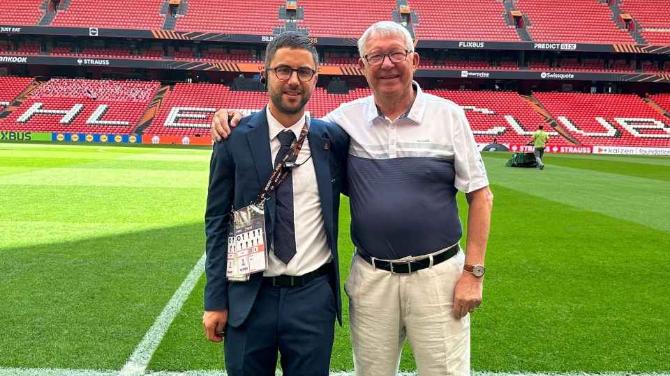
Professionally, my proudest achievement is probably being appointed Project Lead for the 2027 UEFA Conference League Final and UEFA Super Cup. It feels like the point at which my experience in communications, operations and events has come together. I now hope to use that experience to contribute to the successful delivery of some of the biggest events in world football.
What skills or lessons from FIMBA do you still use in your work today?
FIMBA gave me many skills that I continue to use in my role today. I particularly remember a paper that discussed the ability to “zoom in and zoom out.” I still apply this concept regularly when managing a project. There are always many individual tasks contributing to the final objective, so it is important to zoom in and give each one the necessary attention. However, it is equally important to zoom out, maintain an overview of the project and anticipate what is coming next.
FIMBA also strengthened practical skills such as prioritisation. I learned this through tools including the Eisenhower Matrix, as well as through the experience of balancing assignment deadlines and group work.
The multinational nature of the cohort also encouraged me to approach work with a more open mind. I now work in an environment with more than 50 nationalities, and that experience has helped shape how I communicate, collaborate and adapt to different perspectives.
How do you see football operations and event management evolving over the next five years?
At UEFA, we regularly look beyond football and visit other major events, including the FIFA World Cup, the NFL Super Bowl and Formula 1, to understand what other organisations are doing. Across the industry, much of the current development centres on technology and the fan experience.
Technology will have a major impact both on and off the pitch. From an operational perspective, we are already seeing technologies that monitor crowd numbers and density, as well as developments in ticketing, LED systems and advertising solutions designed to reach wider audiences. For supporters, tickets are now predominantly digital, concessions are becoming contactless and, at some venues, food and drinks can be delivered directly to spectators’ seats. The range of additional experiences available to fans at an event is also continuing to grow. On the football side, paper substitution cards are gradually being replaced, while performance and match analysis are becoming increasingly sophisticated. However, VAR continues to create operational and communication challenges.
If you could give your younger self one piece of career advice before entering the football industry, what would it be?
I would tell myself to enjoy the journey. Before FIMBA, there was a period when I questioned many of my previous career decisions. I wondered whether leaving the United States had been a mistake and whether I should have remained at the Football Association of Ireland. At the time, the different moves did not seem to form a clear career path.
Looking back, however, every move gave me new experiences, introduced me to new people and expanded my professional network. Together, those experiences ultimately led me to UEFA. Decisions that felt like regrets five years ago now look like inspired choices.
I would therefore tell my younger self to slow down, trust the process and accept that a career path does not always make sense while you are living it. FIMBA arrived at exactly the right time, allowing me to reset, refocus and clarify the direction I wanted my career to take.
Keywords: Where are they now?.