Then and Now: Liverpool School of Architecture Building
Founded in 1894, the Liverpool School of Architecture is one of the oldest in the UK and, by 1895, was the first University to offer a degree programme validated by the Royal Institute of British Architects (RIBA).
The School followed the model of the Ecole des Beaux-Arts. Students drew the classical orders and drew their projects in ink or watercolours. That changed during the Second World War, when the University hosted the Polish School of Architecture. Inspired by the Polish students’ knowledge of modern architecture the School began to rethink its curriculum.
In May 1995, David Thistlewood, former Professor of the History of Art and Architecture at the University, wrote: ‘To reflect on the history of the Liverpool School of Architecture is to discover a microcosm of British twentieth-century architectural influences and values.”
Thirty-one-years later, his words still hold. As part of the School’s extension and renovation, we’ve taken a deep dive into its history, the building and the many talented graduates and staff who have passed through its studios.
The new Liverpool School of Architecture Building officially opens on the 5 November 2026 and in honour of the occasion we’re sharing your memories and photos of the building and the School. Below you’ll find photos of school trips, the building itself and lots of wonderful graduation photos.
If you’d like to share your memories or send us some photos of the School, the alumni team would love to hear from you. You can contact us via email: alumni@liveprool.ac.uk
The building through the decades
Images below, in order:
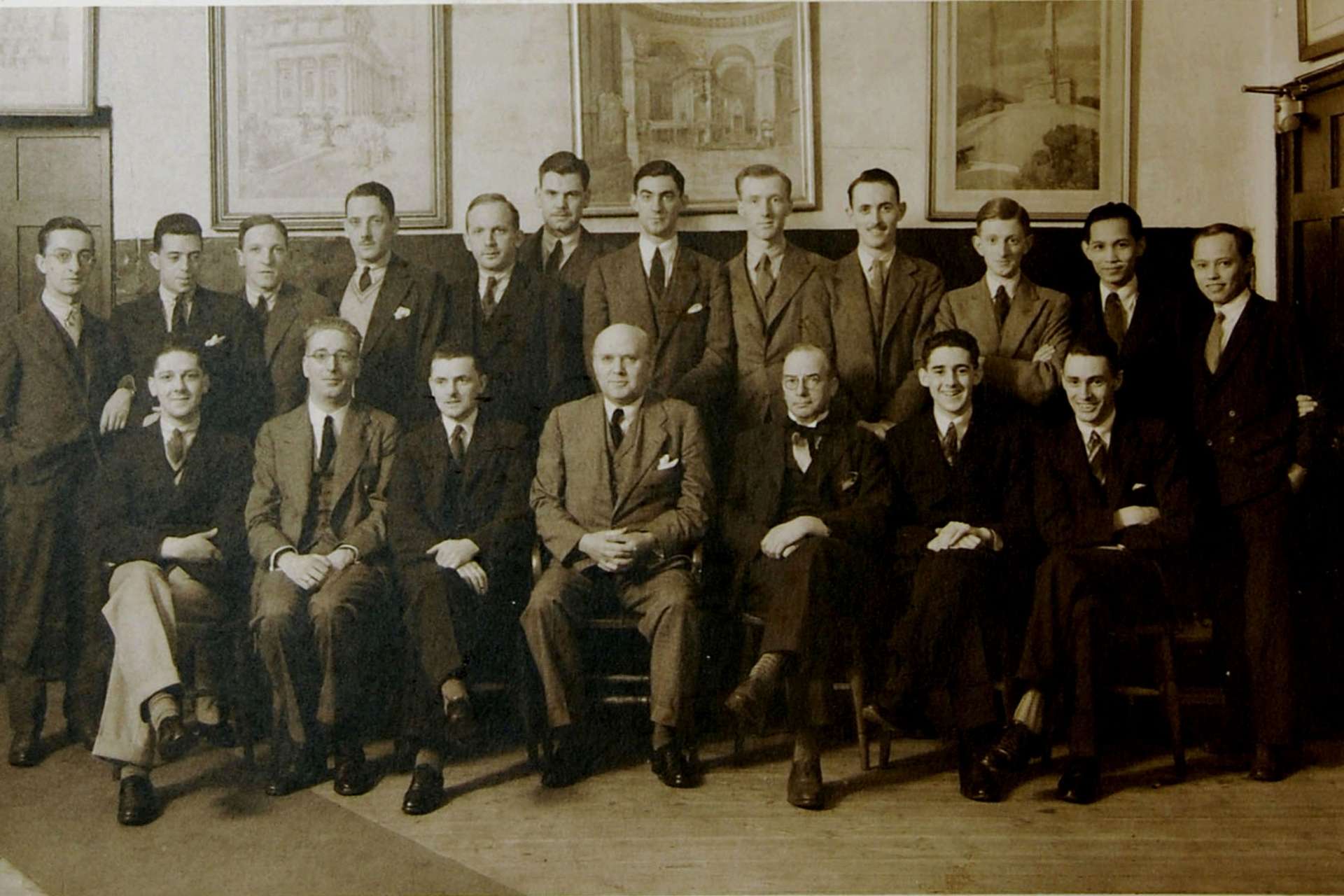
- Professor Charles Reilly with students in the studio, by Courtesy of the University of Liverpool Library (reference S3204/4/1)
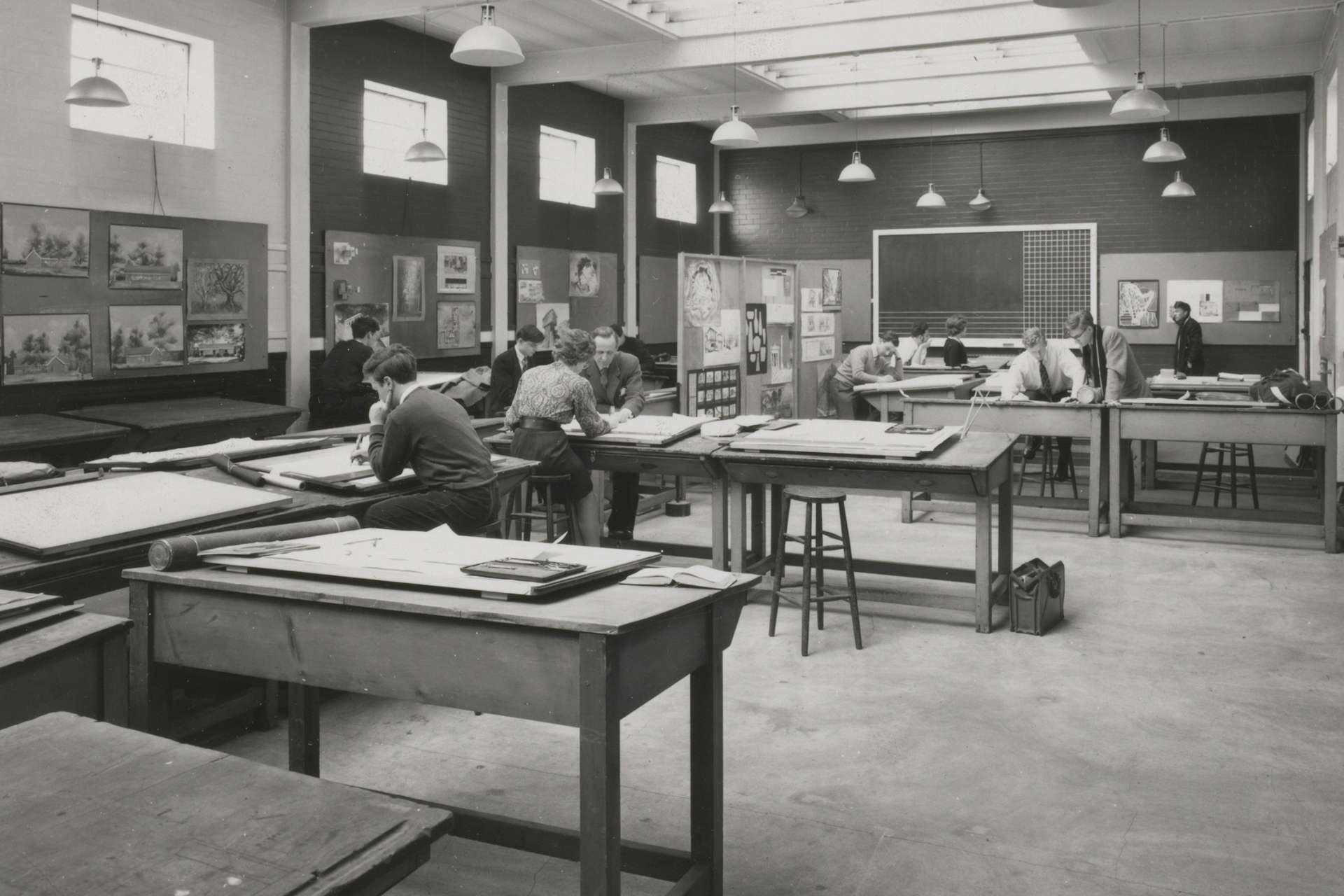
- Architecture students working in the studio
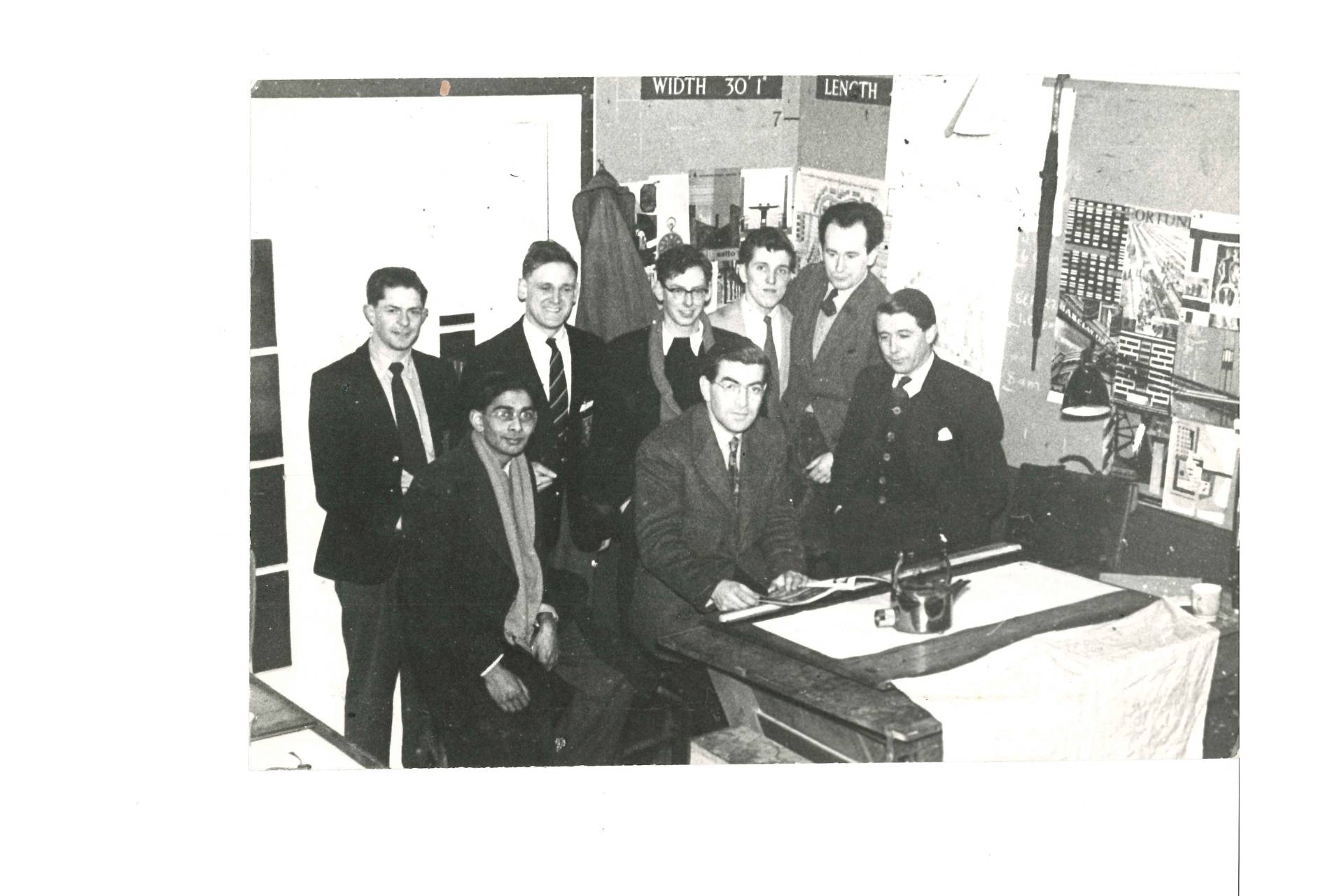
- Architecture students in 1956: Front - Chakravarti Devaprosad, Dewi Prys-Thomas, Gerald Beech. Back - unknown, Ian Becker, Reg Ashburner, Dereck Poole, Bunny Morgan
- Architecture and Town Planning students in 1977, by Courtesy of the University of Liverpool Library (A241/F)
- Students working in the Architecture Teaching Office, by Courtesy of the University of Liverpool Library (A271/F)
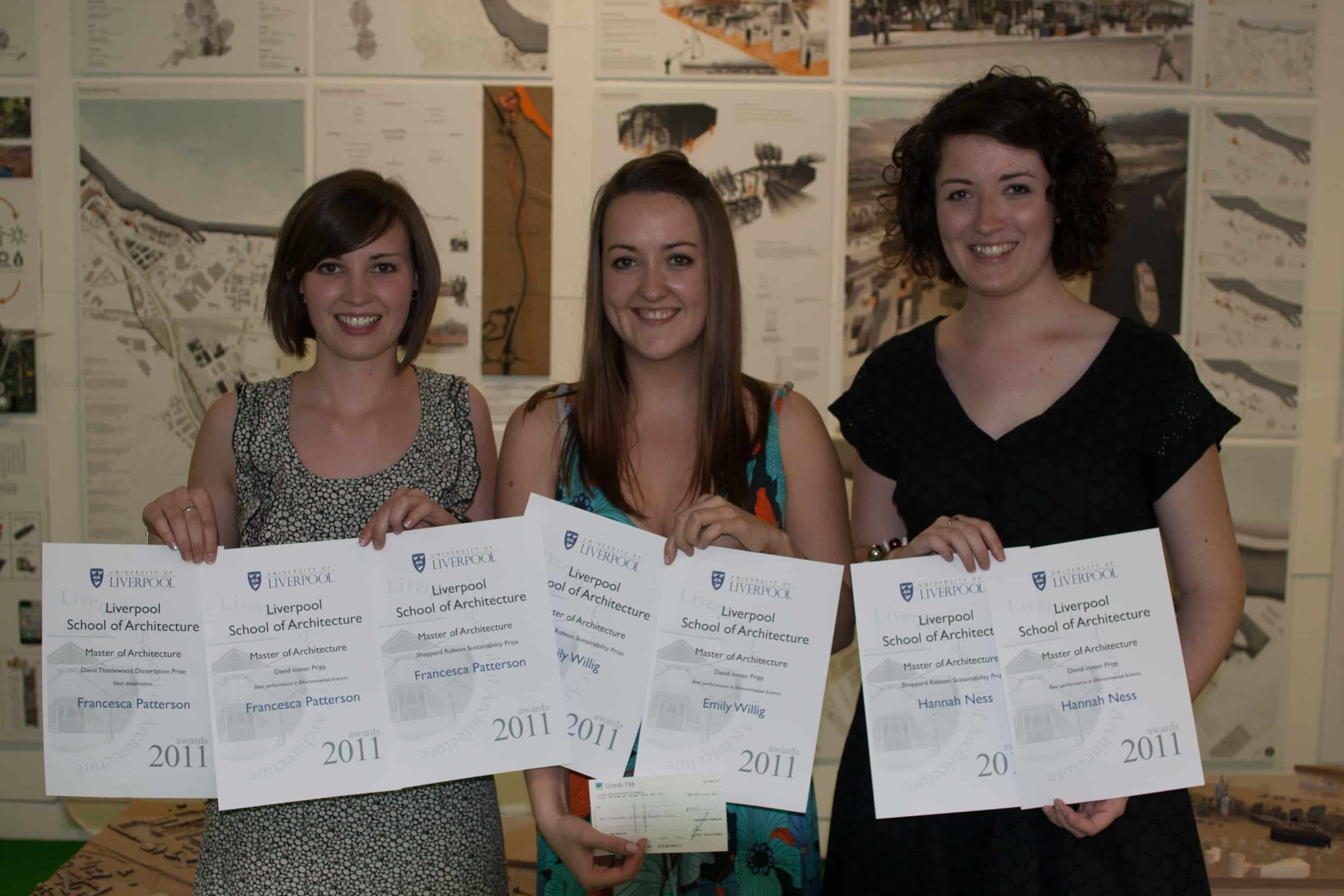
- Master of Architecture students showcase award-winning projects at the Liverpool School of Architecture Awards in 2011
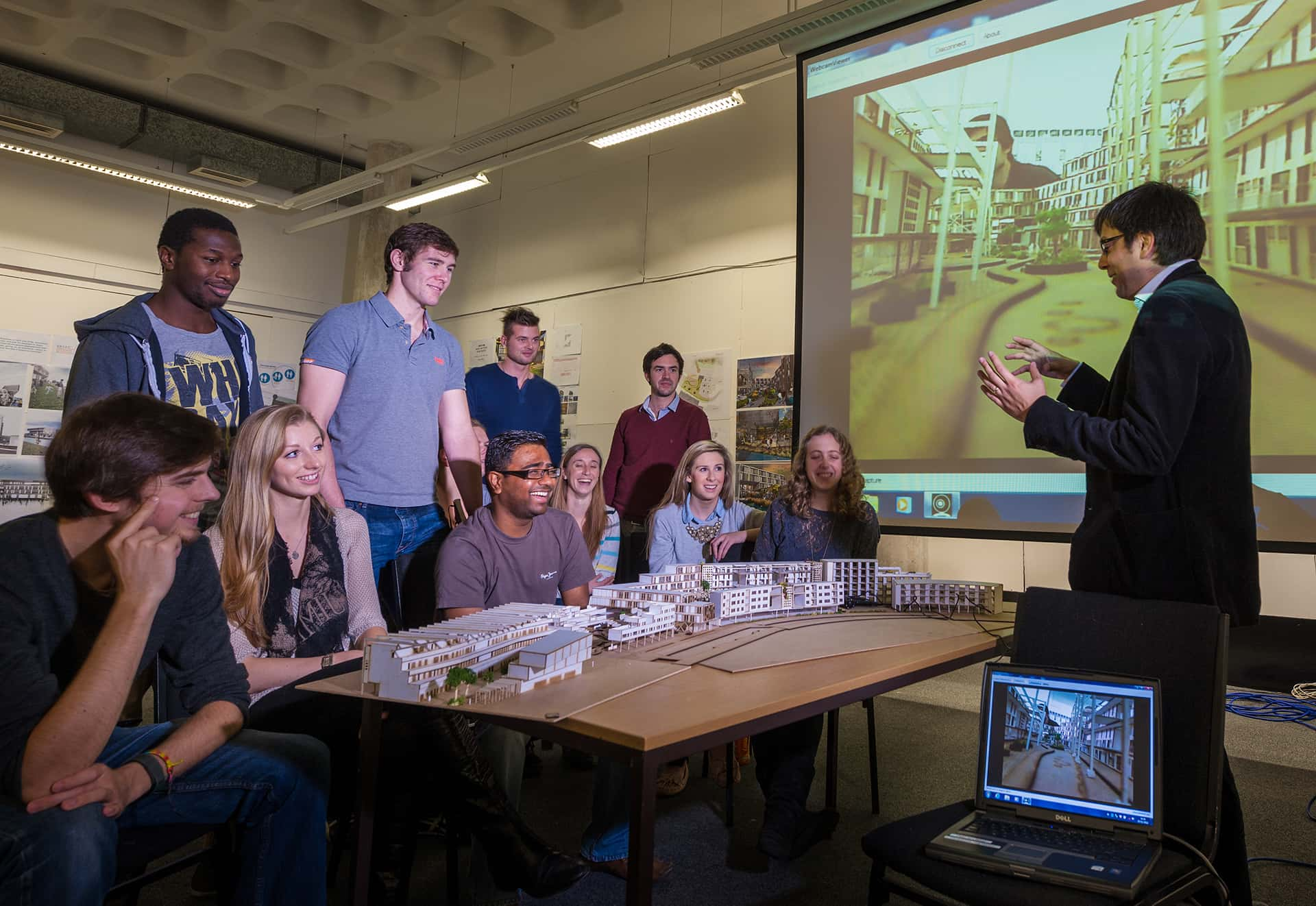
- Students present and discuss a design project around a detailed scale model during a studio review in 2012
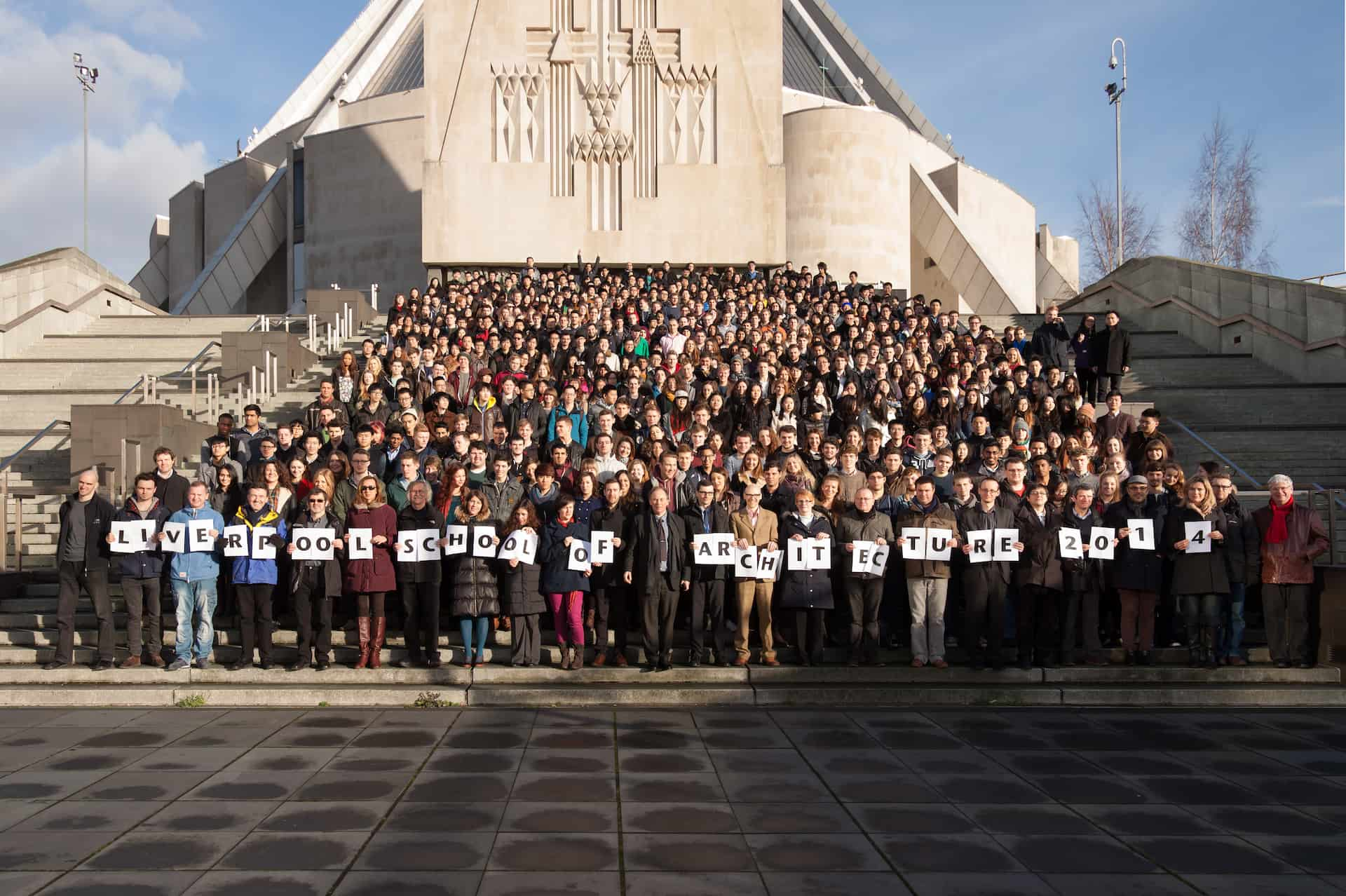
- Students and staff gather for the annual group photograph outside the Metropolitan Cathedral in 2014
- Liverpool School of Architecture graduates from 2023

New Liverpool School of Architecture Building now open
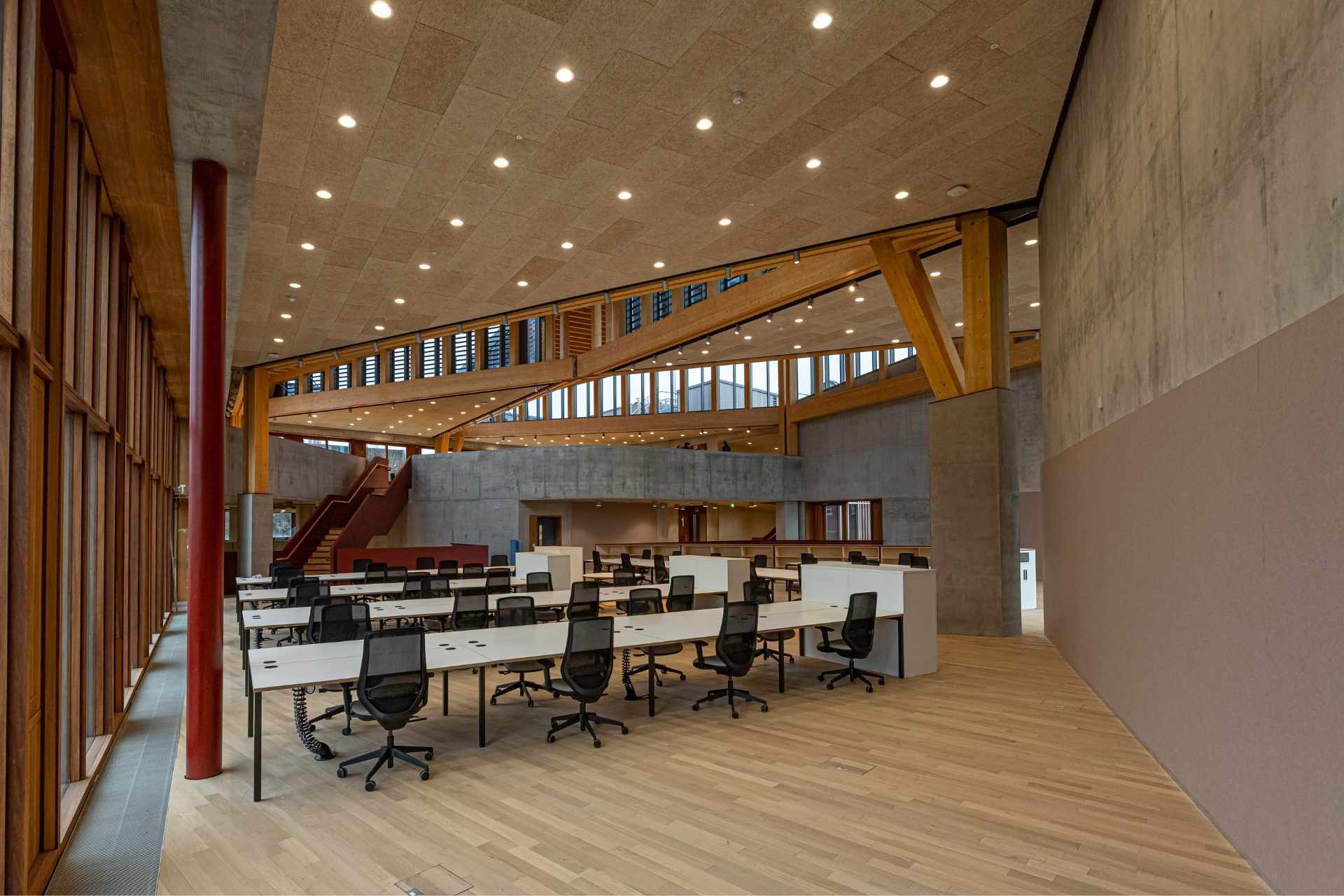
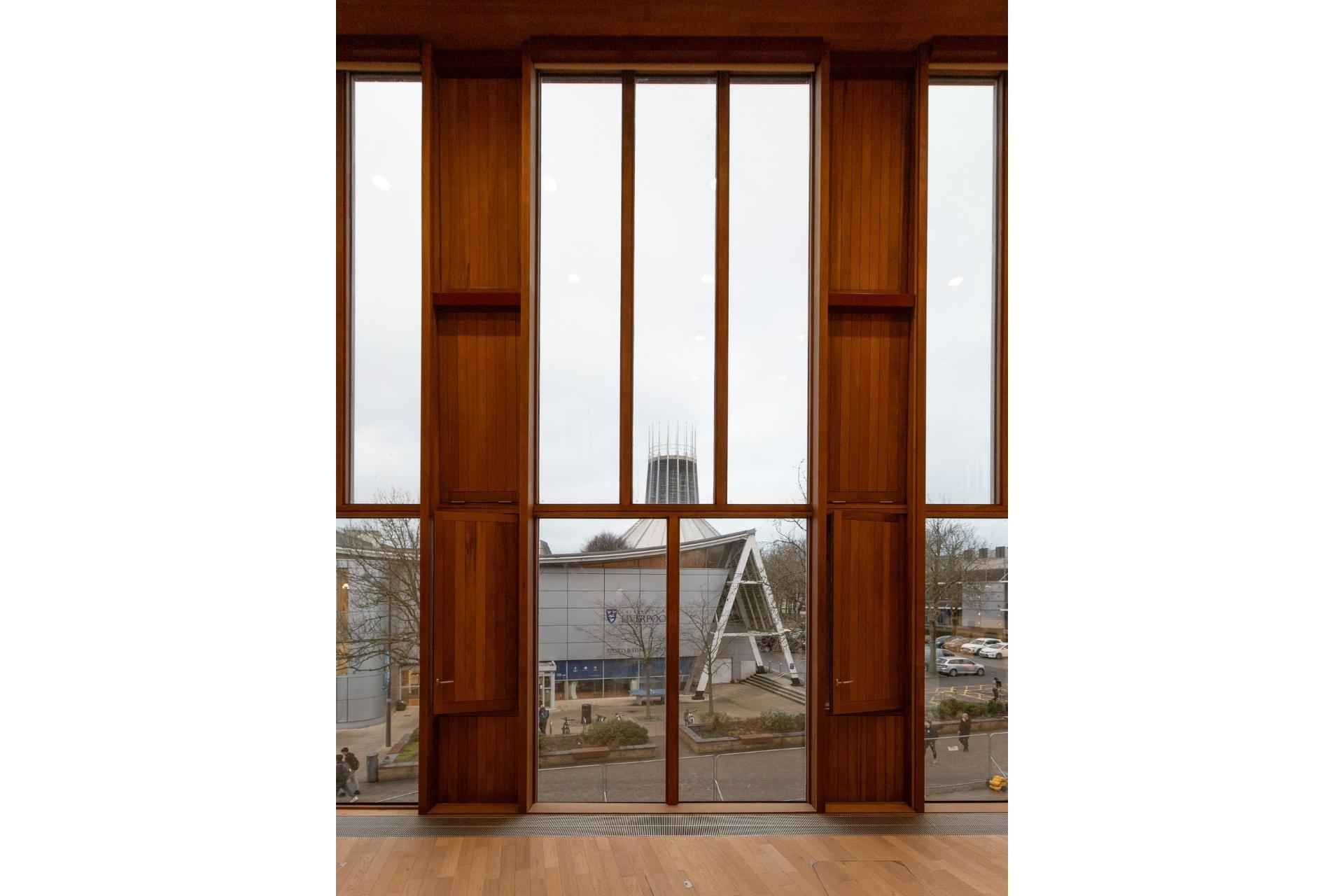
The new Liverpool School of Architecture Building officially opened on the 5 November 2026. It was designed by Dublin based architects O’Donnell and Tuomey who won the competition to refurbish and extend the new Liverpool School of Architecture.
The new extension is expressed as the latest in a series of three buildings (as well as the 1980snhigh-tech extension on top of the 1930s addition) accommodating the School, each reflecting the architectural period in which they were built. The sequence progresses from the formality of the Georgian terrace addressing Abercromby Square, through the less rigid modernism of the 1930s building at the centre of the composition, to the dynamic informality of the ODT addition.
The three buildings express the primary activities each contains – offices. Workshops and studios – and are woven together by a diagonal circulation system, linking the major spaces both in plan and at the variety of existing floor levels in section.

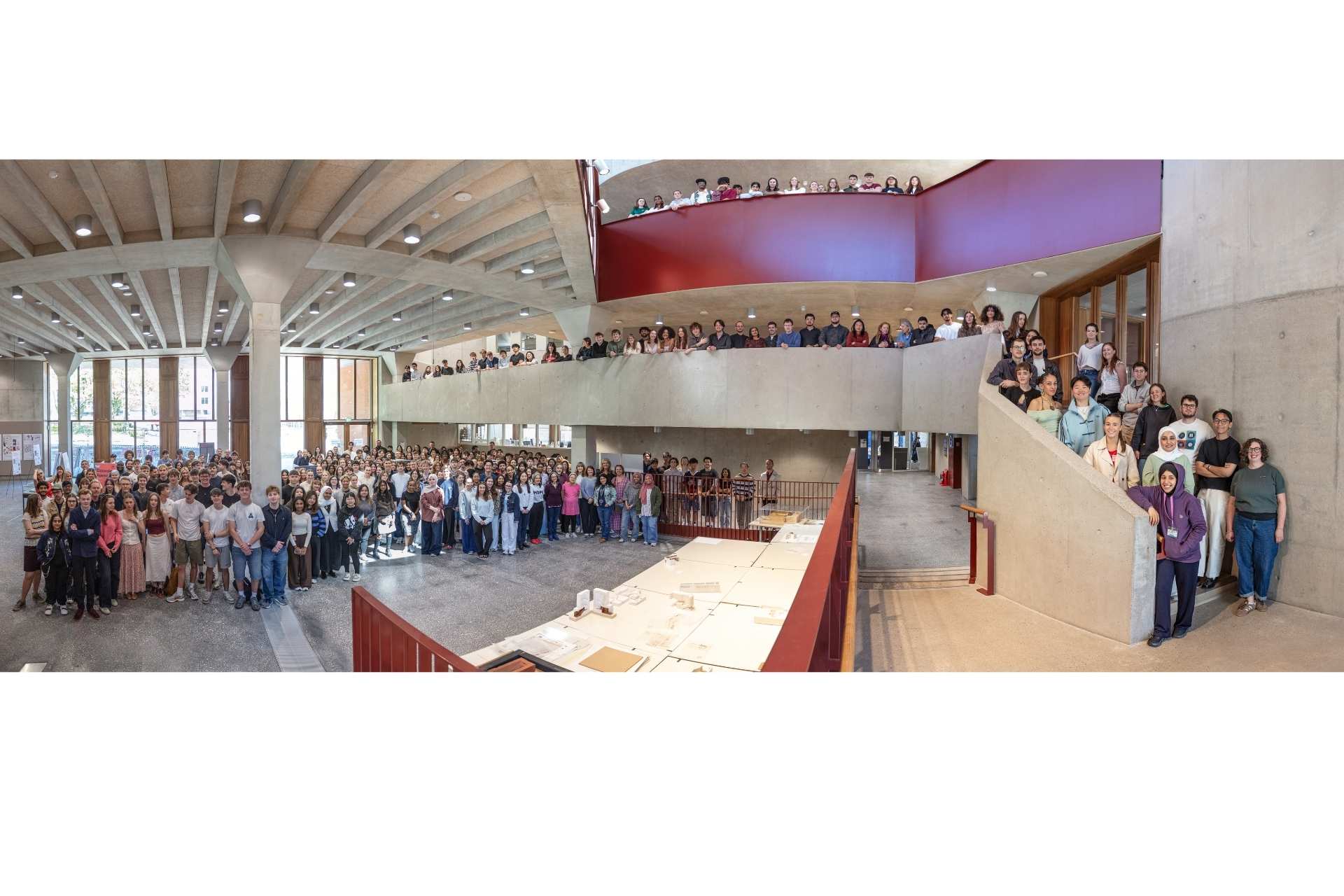
Key people and moments in the School’s history
The Polish School of Architecture (1942-45)
As early as 1941, a group of Polish architects and painters stationed in Edinburgh saw that Poland would need trained planners and architects to rebuild once the war was over. By 1942, the Polish School of Architecture was inaugurated within the Liverpool School. It was established to train architects from the Polish armed forces who would go on to rebuild their country after liberation.
The School had 10 Polish members of staff (slightly outnumbering their Liverpool counterparts), and at its height some 50 Polish students, who shared studios with British men and women who were facing conscription.
All aspects of the teaching programme were geared towards equipping the Polish students with the necessary skills to rebuild Poland after the war. Students of both Schools would follow the same programme. The Polish students also had lectures on Polish historical architecture, building construction, Polish building law and freehand drawing.
Of those Polish students, at least five were women. The School had been admitting women since 1918 and by the 1930s, women accounted for between 30 and 40 per cent of the student body.
In Volume 7 of the Guild Gazette, student W.A. Wondrausch wrote in 1942:
“For the last two months the studios and lecture room of the Liverpool School of Architecture are being invaded by Polish students…There is no need to tell how glad we are to get back to the drawing desk – until the time comes when matters of more immediate importance call us back to the Forces again.
“We all know that the friendship of free nations is not determined by an ambassador’s signature under a treaty; it arises out of the mutual understanding and personal friendship of ordinary people. The fact that we all fight for the common cause has already done much to bring us closer together than we have ever been in the course of history; the great dangers threatening us made it possible for us to realise the basic ideals underlying our civilisations are very much alike; but there is still a good many prejudices to be removed, a good many facts to be learned, a good many problems to be dealt with a good many plans to be fixed for the time of reconstruction. We cannot, we must not leave these matters to our statesmen alone; we have to look for our own solutions if we want to prove ourselves worthy of our task in life.”
Thank you to our generous graduates.
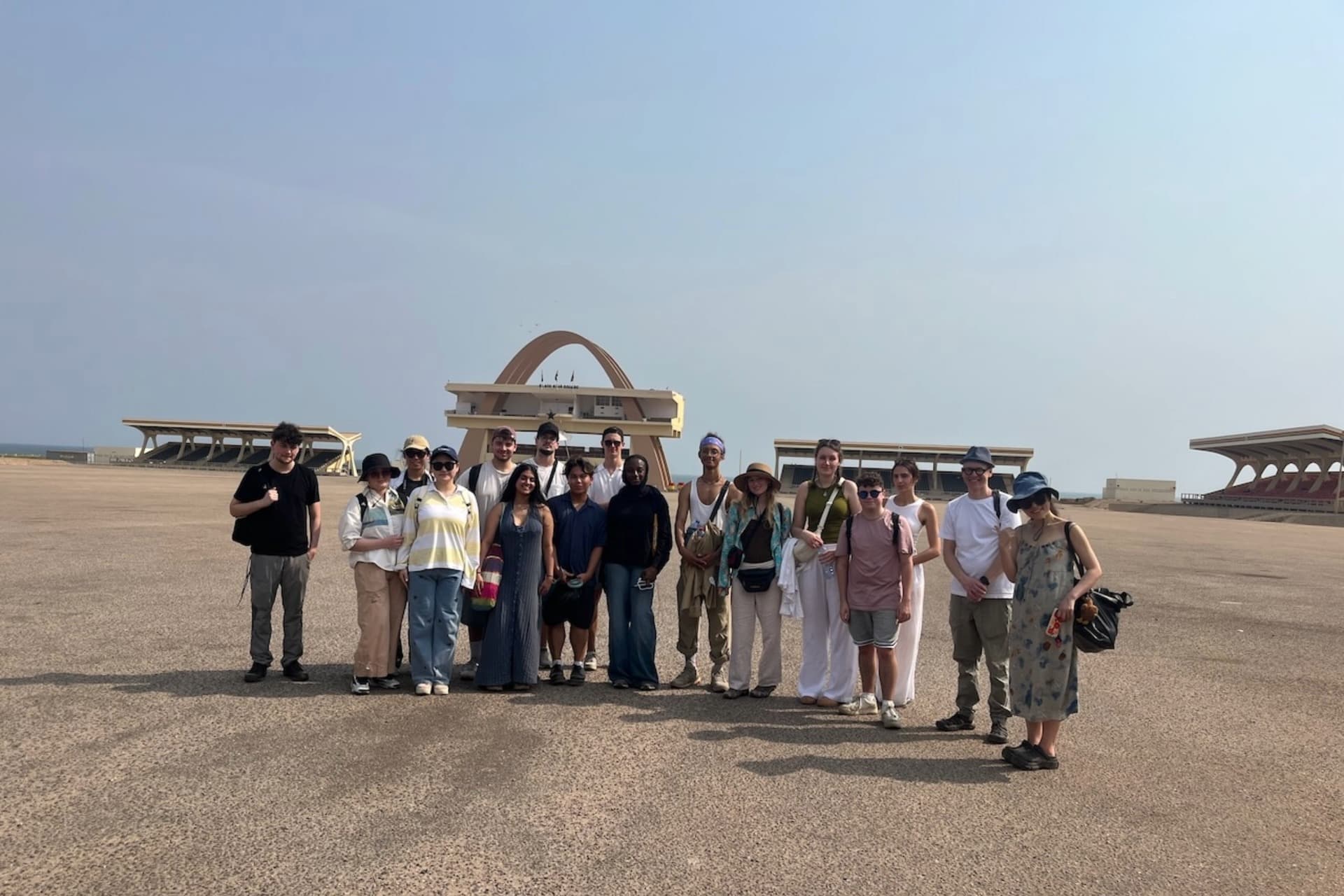
Last year, thanks to alumni donations, final year architects visited Ghana, learning how to create buildings for tropical climates.
Students and the war
During the First World War, many University of Liverpool students and staff left to fight.
Sir Charles Reilly (1874 – 1948) was an architect, professor, teacher, town planner and journalist. On returning from the war where he was an inspector of munitions, Reilly wrote these words for the post-war edition of the LSA Handbook. His words give a sense of the mood in the School during that period:
“But while we enjoy this new life after the war, we cannot forget those of our fellow students who have fallen that we may prosper. Therefore, though this book does not contain any roll of honour, nor the long list of students killed – that is reserved for a more fitting place – it will be seen that the frontispiece has been devoted in their memory, to a drawing by the late Captain Eric Frankland Bell V.C., whom all Liverpool students of the last three or four generations will remember as the shyest, kindest, most lovable and hard-working member of the studios, and whose loyal and unselfish spirit has now been proved in the great and final test.”
Work that shaped the world
Students and staff from the Liverpool School of Architecture have shaped the buildings and cities around us. To mark the opening of the new building we wanted to share a handful of key figures:
Herbert James Rowse (1881-1963)
Herbert James Rowse enrolled at the School in 1905 and was one of Charles Reilly’s first students. After graduating, Rowse established his own practise in 1914 and made his reputation as the designer of the India Buildings and Martins Bank – two large Portland stone clad office blocks in Liverpool’s business district.
By the early 1930s, Rowse’s style had evolved and he was embracing a modernism expressed through brick as can be seen by some of his most well-known works, including the Mersey Tunnel extract towers and Liverpool’s Philharmonic Hall, where today’s students still graduate.
James Stirling (1924-1992)
Born in Glasgow but raised in Liverpool, James Stirling fought in the Second World War and toll part in D-Day. After the war, Striling studied at the University between 1945 and 1950 thanks to a ex-service grant. During this time, Colin Rowe was Stirling’s thesis adviser and introduced him to the Modern Movement.
In 1955 a commission to design a small housing development at West Ham in outer London encouraged Stirling to set up in private practice with James Gowan. By 1963, the firm had completed the design of the Engineering Building at Leicester University, which was met with international acclaim. Stirling went on to work on the History Faculty in Cambridge (1967), the Florey Building at Oxford University (1971) and the Neue Staatsgalerie in Stuttgart, now a classic of museum architecture.
Recent graduates
The School’s graduates are doing outstanding work today. They include:
- Sarah Harrison (BArch 2002) working from Penny Lane
- Zara Moon who is based in Ribble Valley (MArch 2013)
- Jo Day (BArch 2002) running her practice in London
Alumni also lead some major practices:
- Jim Eyre (BA Hons Architecture 1980, Hon LittD 2009) of WilkinsonEyre
- Alastair Richardson (BArch Architecture 1992) is a Director at Cox Architecture
- Simon Henley (BArch 1992) at
2025 trip to Ghana
Thanks to generous donations from graduates and supporters, last year final-year architecture students took part in a landmark field trip to Ghana where they learnt about creating buildings for tropical climates.
With thanks to everyone who donated to the Student Fund, which provides bursaries, scholarships and financial support to clubs, societies and trips.
Visit the Exhibition
Housed within the new Liverpool School of Architecture building, the Exhibition runs until December 18 2026 and is free to visit. The Exhibition celebrates the School’s history and includes drawings, fabrics, films, books, products and models.
New Liverpool School of Architecture Book – order online
Professor Iain Jackson has created a beautiful hardback history of the School and its Exhibition, and much of this article draws from the book. The edition is 580 pages with images and contributions from 25 professionals from around the world. You can order your copy of the book online.