How Hustle went from a university kitchen to gyms across the UK
Posted on: 26 January 2026 by Leon Hodgson in Where are they now?
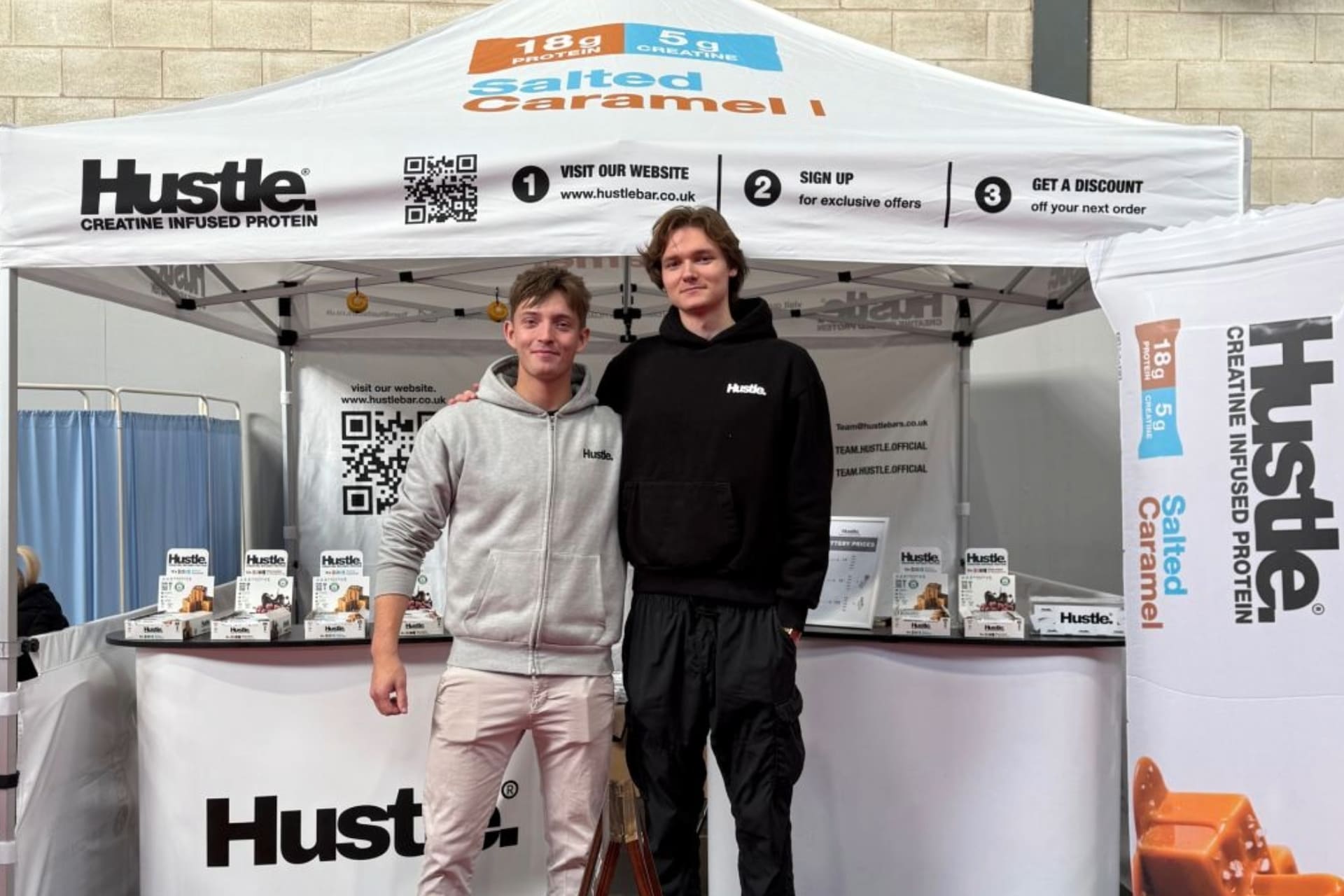
Leon Hodgson and Michał Szachniewicz both studied Business Management at the University of Liverpool, graduating in 2025. While still students, they co-founded Hustle, the UK’s first creatine-infused protein bar - turning university coursework, competitions and a shared entrepreneurial mindset into a fast-growing fast-moving consumer good brand. We spoke with Leon to reflect on his time at Liverpool, the city’s influence on Hustle’s beginnings, and the lessons learned from taking a business from idea to reality while still at university.
Looking back at your time studying Business Management at the University, what moments or modules had the biggest impact on shaping you as an entrepreneur?
A combination of practical modules and real‑world knowledge had the biggest impact on Mike and I. Modules such as The Business Simulation that focused on management and strategy stood out because they encouraged Mike to think beyond theory and actually apply ideas to Hustle. Whereas our module on digital Business with Dr Jennifer Davies gave us the inside knowledge on improving automation, functionality and utilising AI to its full capability. Pitching, group projects, and problem‑solving under pressure mirrored what running a business can really be like.
Entrepreneurship is about being adaptable, pivoting on any single moment and working as a team to overcome the challenge in front of you.
Liverpool is known for its entrepreneurial ecosystem – how did the city itself contribute to your journey and the early stages of Hustle?
Liverpool is the city where the idea of Hustle became a reality. Mike and I would often take a walk to the business district or the docks and witness the 'hustle and bustle' of the city. Young professionals rushing from A to B without slowing down. We found this inspiring yet also enlightening. "How would someone with such a business orientated, fast-paced lifestyle be able to prioritise their nutrition?" Short answer: they can't. This thought train gave Mike and I the confidence to push the idea into reality. If this was a problem in Liverpool, it's a problem elsewhere too and entrepreneurship is about fixing problems.
Can you walk us through the moment when the idea for Hustle first came to life? What problem were you trying to solve and how did you validate that idea as students?
The idea for Hustle came from a moment of pure serenity and search for a solution. I was away with my family and feeling the summer vibes when the idea to put creatine into a protein bar just popped into my head. I have always taken creatine as a supplement yet despised the methods of taking it and this idea seemed like a chance to fix that. Little did I know that idea I had become the epicentre of the next few years of my life. Crazy.
To be honest, at first the idea wasn't really validated by anyone. Those who we did tell would say "If it's possible, why hasn't it been done before?" and for the most part, the idea and concept was a secret that was under lock and key for about a year before we actually brought it to light on the 25 February 2025.
We would conduct surveys with our actual objective hidden in and amongst other questions to throw people off, so without knowing, our friends and family would be validating the idea. We were driven by the fear of the wrong person finding out and the idea being stolen!
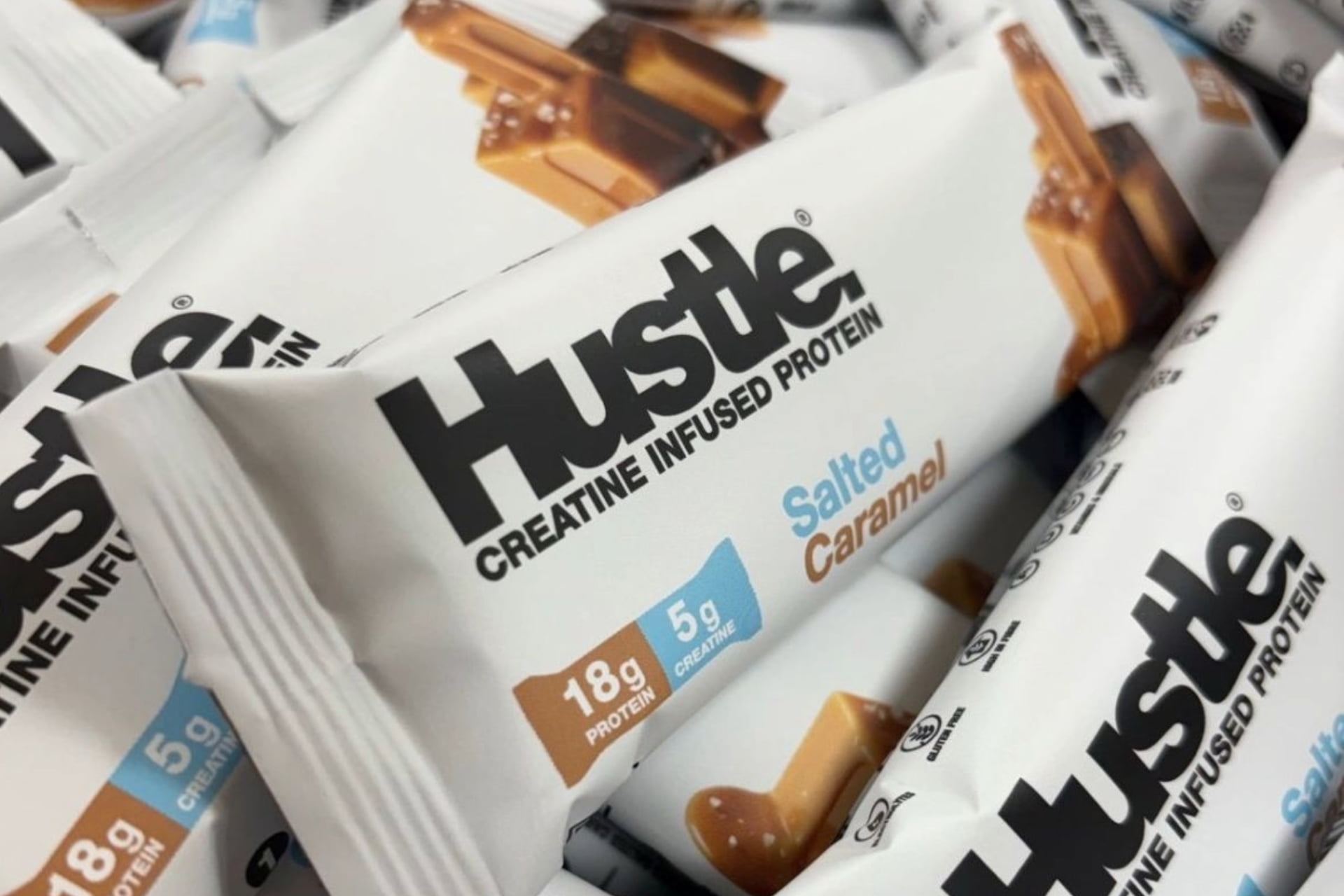
You launched Hustle from a university kitchen with zero funding. What were the earliest challenges you faced and how did you and Michael overcome them together?
The biggest challenge was easily funding. Mike and I were students and as many of you know, students are skint. Yet, the protein bar industry is a volume game, without volume, we couldn't compete on price. So, we went bold and took a pretty big risk. I sold my car; Mike parted with his hard-earned savings and the university competitions funding helped us take a leap. However, this only brought together enough funding for a small production run of 8,000 protein bars (for reference, last year Grenade produced 150 million!). Every bar we sold, we were losing money. Hustle was a sinking ship in a storm.
So what did we do? We networked and we made noise. We decided to shout about our dying business from everywhere we could. At events, in gyms, social media, even on the streets of cities, until eventually, the networking clicked and we made enough noise to be noticed. Very long story short but we met some fantastic people from a company that Hustle would soon become a part of. We are unbelievably blessed and a huge thank you and shout out to Emerge Global, Tony O'Neill, Mark Bigley, Richard Harris and many more.
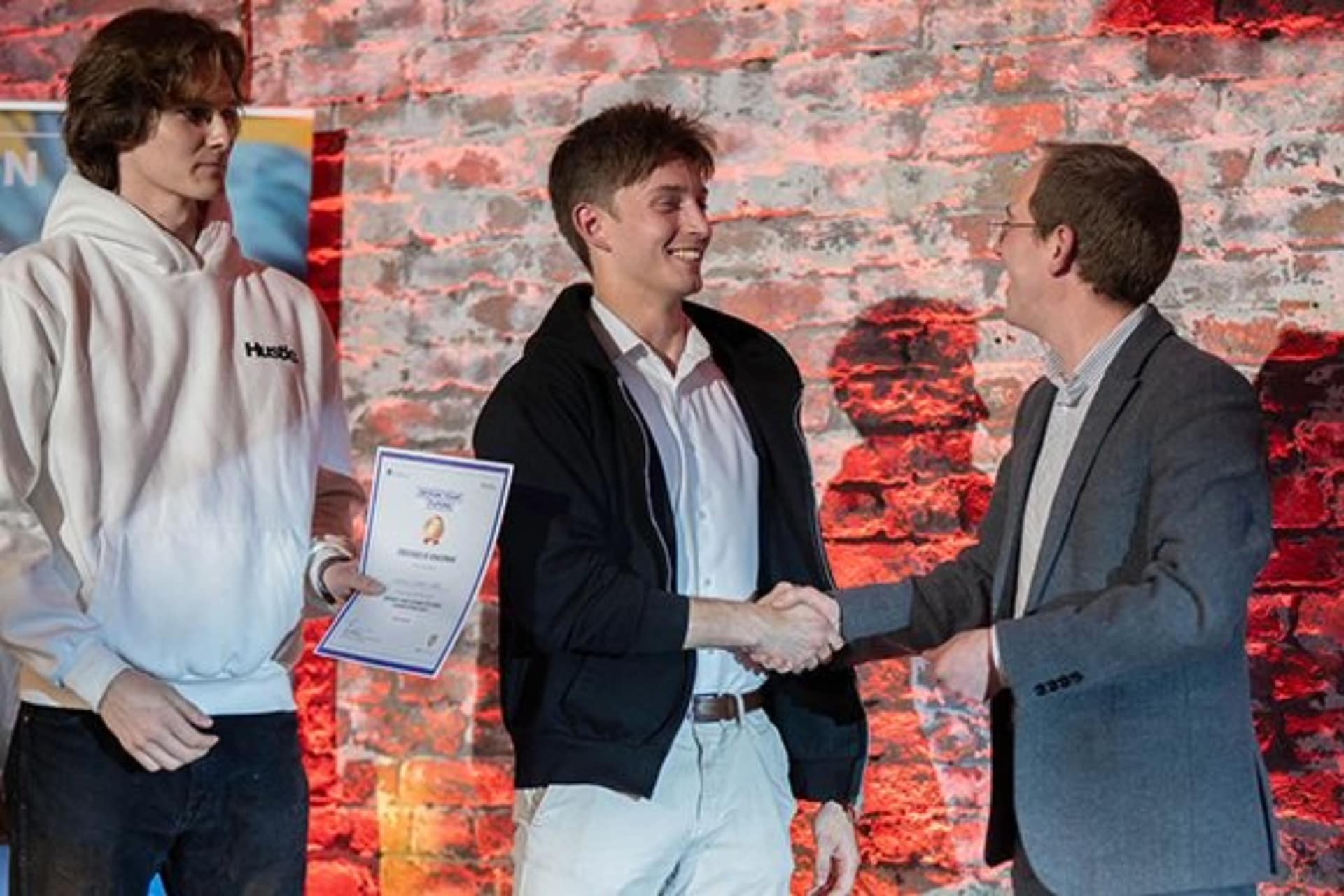
Winning the Enterprise Fund and the Design Your Future Pitching Competition was a major milestone. How did those experiences and the funding help shape Hustle’s development?
Firstly, the Enterprise Fund and Design Your Future competitions are a huge help in getting off the ground for any business idea. So, if you're reading, I encourage you to check these out!
These competitions require live pitching, business plans and critical thinking. The prep for each of these aspects require you to step into the mind of the people you are pitching to. Mike and I have learned that it is all well and good to approach a problem with your own mindset, but you will often be subject to bias. Yet, approaching a problem from the angle of a third party helps you see with a fresh pair of eyes. The development of these skills has been imperative in the building of Hustle. Without the university, the competitions and the support received from the Entrepreneurship team, Richard Leighton and Ben Dalton, I can confidently say that Mike and I would not have been as prepared for the reality and brutality of the business world.
Hustle is now stocked in gyms and vending machines across the UK. What has been the standout highlight or proudest moment in the journey so far?
The access points (gyms, vending machines, health food stores) are fantastic and the fact that Hustle is stocked in hundreds of these locations across the UK now, is surreal. However, the highlight has to be the consequence of this. The bars wouldn't be stocked in these locations they weren't frequently getting purchased from their customers. Hustle has become a part of thousands of people’s daily routine and Mike and I have developed a product that has made an impact. That is our proudest moment.
What role did mentors, staff, or University of Liverpool support networks play in helping you move from idea to functioning business?
Mentors come in all shapes and sizes. People offer guidance every day. Sometimes you have to take it with a pinch of salt, but the reality is, a business will only thrive and grow with the support of other people. Mike and I have studied business theory for years but not very much will prepare you for the reality of business except the imparted knowledge of those who have experienced it before.
Whether this comes from the University entrepreneurship team or someone you bump into in a coffee shop, hear their knowledge, take it on and always be open minded to other people’s expertise.
As founders still in the early stages, what are the big ambitions you have for Hustle over the next few years? Where do you see the brand going next?
There are two main ways Mike and I look at Hustle. We zoom in and we zoom out. We zoom in and chase the smaller wins, the daily wins, the ones that add up and make the zoomed out wins achievable.
Over the next few years, we aim to have Hustle international, UAE, Europe, USA sales channels in place. We aim to release more products, more flavours and grow our team. However, more than anything else, Mike and I aim to arm ourselves with the knowledge and expertise to take on bigger challenges and other realms of business.
We will push every day for not only the growth of the brand into a product diversified MNC (multinational corporation) but also for the growth of ourselves.
What advice would you give to fellow graduates who are considering starting a business after university – especially those who doubt whether they’re ‘ready’?
The first thing I'd offer, is: Why are you waiting until after university? Get after it! That idea you have might not be there tomorrow, or your personal circumstances may not accommodate the business volatility.
University will allow you to consult your peers, reap the benefits of the support networks and also have loads of quiet spots to get some work done.
I wouldn't worry about waiting for the timing to be perfect or for you to have more knowledge in the field. I'd suggest starting, even if it's just a business plan. You'll learn on the way and with any luck, you'll get the bug for it and before you know it, you'll be stressing over things you didn't know existed 10 months ago, but you'll be blessed enough to be living your dream.
And finally, if you could give one piece of advice to your younger self starting out at university, what would it be and why?
I'd tell myself that if I am going to start a business in the summer before my final year at university, that I NEED to manage my time better! I could have saved myself countless headaches if I started that assignment a few weeks earlier!
Also, I think I'd take a page out of Mike's book and travel. I think the summers between university years are a perfect time to get some miles on your soul and see the beauty and diversity of the world. I am sure that this opportunity will present itself at some point again, and I'll be sure to capture it.
A huge thank you to Leon for sharing his career journey with us. Feeling inspired to share your own story or get involved? There are plenty of ways to stay connected:
- Connect with the University: Follow the Alumni LinkedIn page
- Volunteer with the University: Discover our volunteering opportunities
- Future alumni events: Attend future events organised by the alumni team.
Keywords: Where are they now?.