Dr Isabel Benito Gutiérrez's Musical Journey After Liverpool
Posted on: 12 March 2026 by Dr Isabel Benito Gutiérrez in Where are they now?
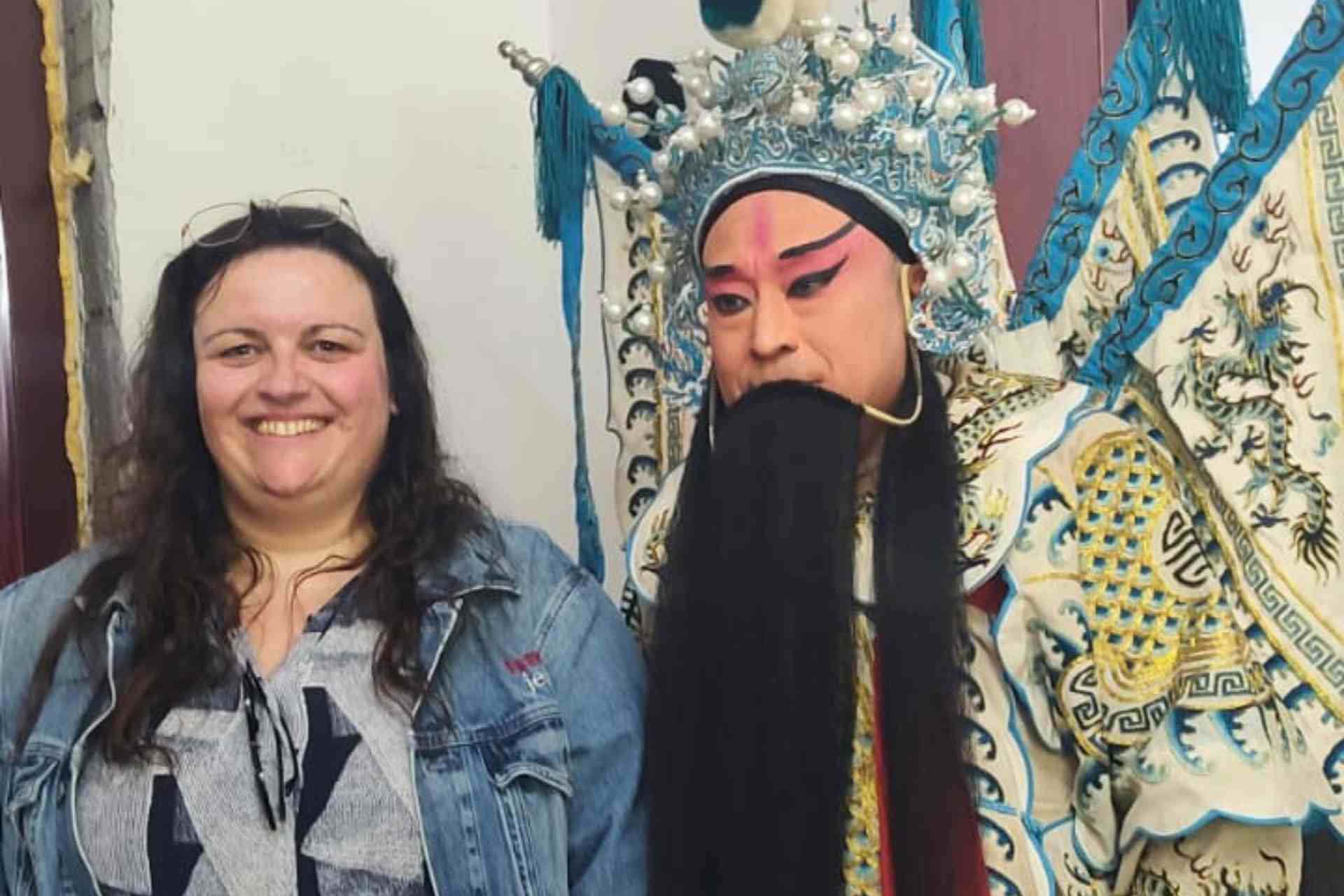
In this blog, Dr Isabel Benito Gutiérrez reflects on her journey after studying music at the University of Liverpool, and how living and working in China has shaped her research, teaching and creative practice.
My name is Dr Isabel Benito Gutiérrez, I am a composer, researcher, and educator currently based in China. In 2016, I graduated from the University of Liverpool with an MRes in Music Composition, and in 2021 I obtained an MA in the Classical Music Industry.
These degrees enabled me to develop not only my understanding of music as a creative practice, but also my ability to devise performance ideas, manage budgets, and organise events. During my MA, I had the opportunity to work with the Royal Liverpool Philharmonic Orchestra and to observe how things operate behind the scenes. This truly opened a new dimension for me, and I acquired invaluable knowledge and skills related to branding, marketing, orchestral management, and creative direction, among other areas.
In 2024, I relocated to China to work as a lecturer at the HBU–UCLan School of Media, Communication and Creative Industries in Baoding, Hebei province. As part of my role, I supervise MA students in organising various music-related events. Additionally, when moving to Baoding, I became very interested in traditional Chinese music and local xiqu forms, such as Baoding Laodiao. I put my ethnomusicological research into practice, adapting elements of Laodiao into my own compositional practice. This was a turning point in my career: I discovered new timbres, new ways of perceiving tempo, and a whole new approach to music. Leaving my musical comfort zone was initially challenging, but it took my musical language to another level, where dialogue and hybridity are central.
In November 2025, my piece Baoding: Old Tunes Reimagined (2025) for erhu, cello, piano and bangzi was performed at the university as part of the One Journey in Four Spaces event, which bridged Chinese traditions and Western perspectives. The event was a great success and introduced new ideas to the department, particularly around cross-cultural collaboration and the dissemination of Chinese traditions by reinterpreting their elements to reach new audiences, both younger and international. That was the first step towards the creation of the Intertidal Ensemble.
.jpg)
As the Creative Director of Intertidal Ensemble, I oversee its artistic vision and strategy, and I lead the group. In addition, I create arrangements for the required instrumentation. The ensemble aims to bring together traditional Chinese and Western classical instruments in a collaborative setting that explores repertoire from both traditions, fosters artistic exchange, and presents innovative performances and workshops that make Chinese music accessible and engaging to diverse audiences.
The ensemble comprises: Prof Jian Li, an erhu master, pianist and composer, and one of the leading musical figures in Baoding. Prof Li is a member of the Chinese Musicians’ Association, the former vice chairman of the Baoding Musicians Association, and a Baoding University professor; Eric Ton, a cellist and double bassist, an award-winning performer, Associate Principal of the Ganzhou Philharmonic, international competition prize-winner, and recipient of the Hummingbird Award; Liu Yiwen, a violinist, award winning ensemble performer, Suzuki Method educator, and distinguished judge recognised for excellence in Hong Kong and North China string competitions; Zitong Niu, a Chinese percussionist and Minzu University graduate, an award-winning performer in national competitions, a leader within Baoding music associations, and internationally experienced across major conservatoires and concert halls; and Xingyu Niu, an award winning pianist, member of the Baoding Keyboard Committee and Musicians Association, and artistic coach for the Vocal Music Golden Bell Award. In addition, the ensemble will collaborate with performers of other Chinese instruments, such as the guzheng and the xun.
The ensemble will be presented this spring at Xinghai·Tai Le Music Studio in Baoding. At this event, the ensemble will perform music in different styles to demonstrate its versatility. The ensemble will curate two kinds of performance. One will take the more conventional form of a concert in which Chinese and Western music is arranged for the ensemble’s instruments; for example, an upcoming event at the French Institute in Beijing will feature a mixed programme of works by French composers alongside traditional Chinese music. The other type of performance will be aimed at a younger and more experimental audience, reinterpreting Chinese traditions through contemporary lenses and combining them with other disciplines such as calligraphy, photography and graphic design. These events will be held in art galleries and other unconventional settings. Additionally, the ensemble will issue open calls for scores and other art forms, and it will also organise educational activities and workshops.
In summary, this project is a search for new artistic languages that bridge tradition and experimentation, and the West and the East: a dialogue that traverses the world through collaboration, understanding, music and the arts. It seeks a third space in which different cultures can meet and build a new hybrid performance practice and sound, and to share it with wider communities.
If you would like to learn more about the ensemble or to participate in any capacity, please email info@intertidalensemble.com.
Alternatively, you can add Isabel on WeChat (ID: isubenito).
Keywords: Where are they now?.